


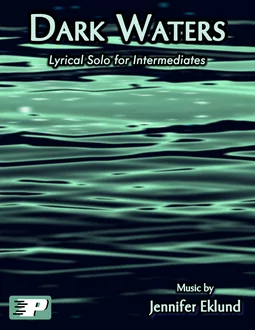
Dark Waters
Jennifer Eklund Intermediate
Digital Download
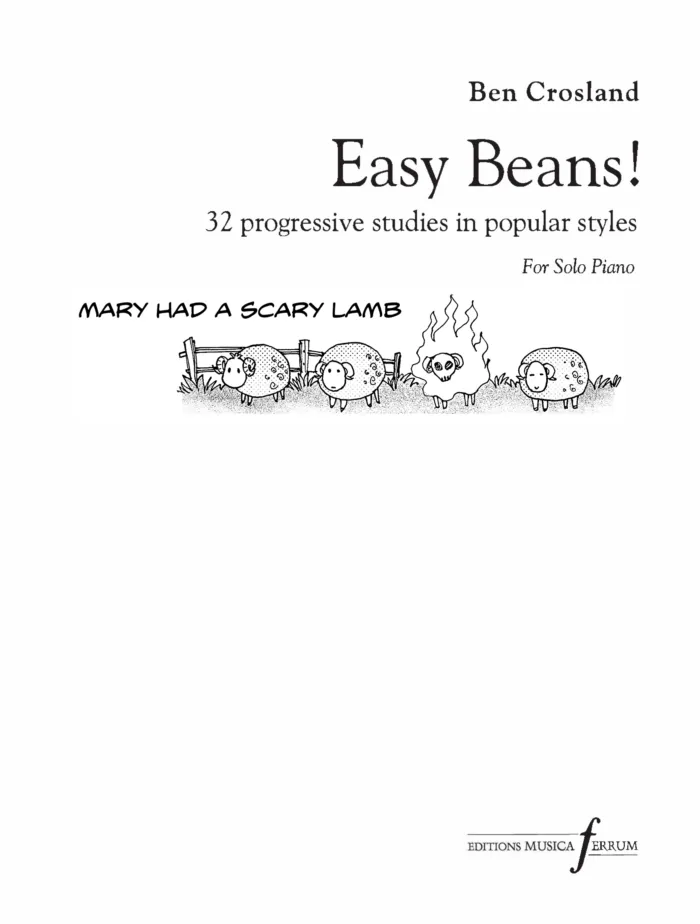
Mary Had a Scary Lamb (from Easy Beans)
Ben Crosland Late Elementary
Digital Download
Printed Edition
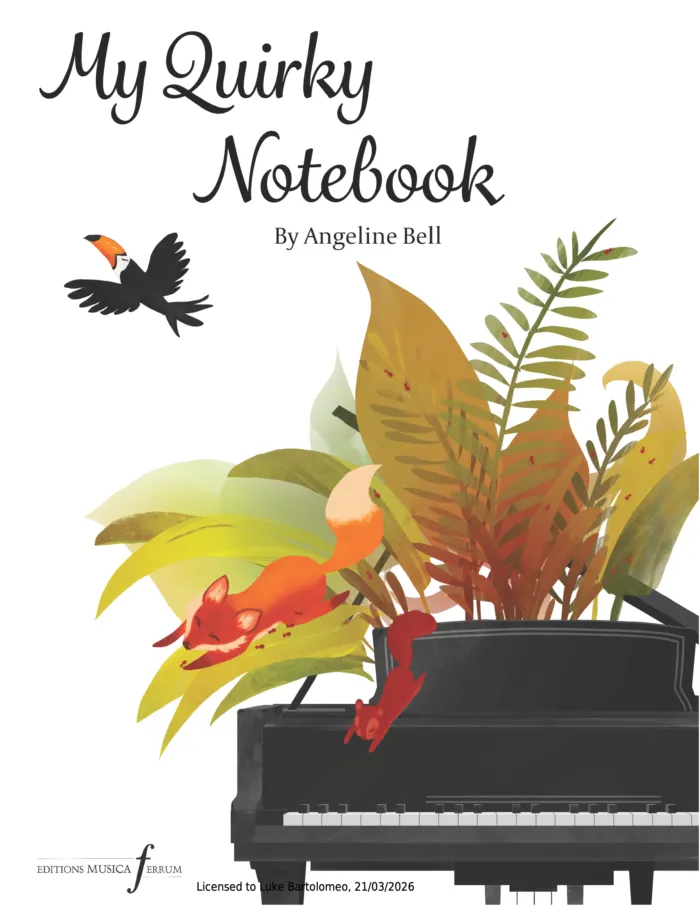
The Spider (from My Quirky Notebook)
Angeline Bell Late Intermediate
Digital Download
Printed Edition
This week’s episode is a Halloween episode. Sort of. The three pieces I play don’t involve costumes or trick-or-treating, but they each feel right at home in October- and they’ll still be worth playing in November. Jennifer Eklund’s Dark Waters is a haunting waltz with some satisfying challenges for intermediate students. Ben Crosland’s Mary Had a Scary Lamb takes some familiar childhood sounds to a wonderfully creepy place. And Angeline Bell’s The Spider offers a more graceful look at a creature I usually prefer to admire from a distance.
— Transcript —
This week’s episode is a Halloween episode. But not really. None of these pieces are about haunted houses or your costume or trick-or-treating, but each one feels right for this time of year. We have a dark and rather beautiful waltz. We have a children’s song that has gone terribly wrong. And we have a spider. If you heard last fall’s spider episode, you may be surprised that I’m willingly spending time with another spider-themed piece. Three pieces each, with a little October in them, coming up next on the Piano Pedagogy Playlist.
Greetings and welcome. I hope your day is going okay. My name is Luke Bartolomeo. I’m a pianist, a teacher, and also a developer of music education apps for children, including Flash Note Derby and Rhythm Swing. Each Monday on this podcast, I play through some of my current favorites from the Piano Teacher’s repertoire, written by living composers.
Let’s start out today with a slightly unsettling and shadowy waltz. It’s called Dark Waters by Jennifer Eklund. It’s listed as an intermediate-level piece, but it’s got a few sophisticated challenges packed into its three pages. First, it’s in C-sharp minor, so if that’s going to be new for your student, it might be a good idea to assign some scales, technical exercises in that key as preparation.
The left hand in this piece has this little three-note motive played with fingers three, four, and five. And these notes alternate with a note in the thumb, and that thumb note can’t be too loud. I don’t know about your students, but mine often have thumbs that really like their moment in the spotlight. So we spend a little time working on that weight transfer, keeping it soft and under control.
There’s also a prominent use of appoggiaturas. Officially, the appoggiatura is an accented, non-chord tone, approached by a leap, usually upward, and then it resolves by a step in the opposite direction. I think they’re best described as giving the music a sighing quality. Or in this case, actually, more of an aching quality. And well, this piece is just hauntingly beautiful. Here’s Jennifer Eklund’s Dark Waters.
🎹
Two weeks ago, I featured Ben Crosland’s Easy Beans collection. And there was one piece that I really enjoyed in that book, but it just didn’t fit with the rest of what was going on in that episode. But I deliberately held on to it because I knew it belonged here. It’s called Mary Had a Scary Lamb.
It’s a short and very simple piece. I think you could easily teach it by rote in a single lesson. It’s built on low tone clusters played with a flattened palm. Instant creepiness. And then it jumps up to some random-ish sounding dissonant notes in the high register. Interesting.
Then it repeats that process. Tone clusters. Then the random notes that we now recognize as a familiar children’s song. And then it does this one more time, except this time, that children’s song is taunting us. If you’re listening on headphones, consider turning the volume down just a notch for the next 60 seconds. Here is Mary Had a Scary Lamb.
🎹
I’ve taught students over the years who absolutely light up when a piece is just strange in exactly the right way that that piece was strange. For one of those students, I can imagine Mary Had a Scary Lamb becoming the piece they’re most proud to play for people. Probably much to their parents’ chagrin.
If you’ve been following the podcast from the beginning, you’ll remember last September I did an entire episode about spiders. I even told the story of that spider that landed on the piano keyboard during one of my college juries. An experience I still haven’t entirely recovered from.
Well, I’ve got another spider piece today. This one is by Angeline Bell from the collection My Quirky Notebook, which I explored on the podcast last spring. Most spider pieces go straight for the Tarantella. Bell takes a different approach. Her spider isn’t in 6’8″, and I don’t hear a creature frantically racing across the floor. I hear patience, grace, and a great deal of purpose.
It’s an intermediate piece that uses a wide range of the keyboard, so students really have to keep track of where their hands are at, and some memorization will probably be required. There’s some wonderfully precise rhythmic interplay between the hands that feels very crafty and intentional. This creature knows what he’s doing. Here is the spider by Angeline Bell.
🎹
One quick warning. If you look up the official recording of that piece, the spider, on YouTube, the playing is lovely. But the visuals caught me off guard. I couldn’t tell exactly what I was looking at in the thumbnail, and when I pressed play, I nearly threw my iPad across the room. Fellow arachnophobes, you’ve been warned.
So today, dark water, a moderately disturbed lamb, and a spider with excellent rhythm. They each give students a way to explore an eerie mood. And if Halloween passes before the piece is completely learned, nobody has to feel strange about continuing it into November.
As always, links to purchasing today’s music as an instant digital download are in the episode description, and on the website, pianopedagogyplaylist.com. I’ll also link to my earlier episodes featuring Ben Crosland and Angeline Bell, as well as last year’s eight-legged extravaganza episode.
And just like that, we have to close the lid on this episode of the Piano Pedagogy Playlist. For the past several weeks, we’ve actually had a resident spider, a pretty big one too, living on our back porch. He’s been patiently sitting in his web that he has to rebuild every time it rains or we have some extreme wind.
Given everything I said last year, you might expect me to be looking for an old shoe. But I’ve actually kind of grown fond of him. He’s put all this work into making a home here. I’m almost flattered that he chose us. I get a little worried if I haven’t seen him for a couple days.
I don’t know why I felt the need to share that story. I’m not sure there’s a larger lesson in it. It just brought me a little joy this week. Just like the joy I’ll feel next Monday when we’re back together, sharing some more of what’s good in the contemporary piano teacher’s repertoire. Until then, keep nurturing the music and have a great week.

Leave a Reply