


This week features music that offers reassurance, optimism, and a hopeful outlook for the future.
I’m playing three pieces by three different composers, ranging from early intermediate through early advanced — each selection offering meaningful musical expression alongside valuable teaching opportunities.
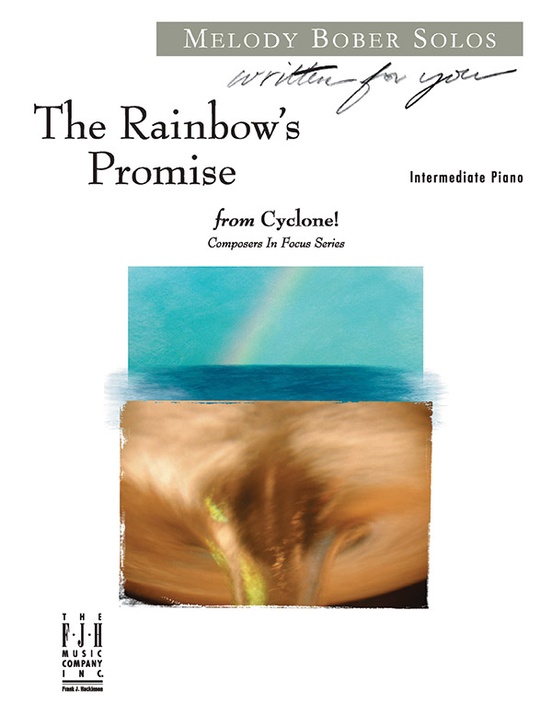
• The Rainbow’s Promise by Melody Bober — an expressive intermediate-level piece featuring some fancy cross-hand arpeggios and opportunities for developing melodic voicing in the left hand.
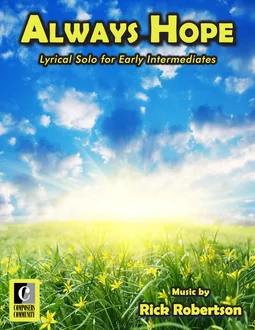
• Always Hope by Rick Robertson — a lyrical selection ideal for late elementary or early intermediate students, with a focus on rhythmic flexibility and musical balance.
• Chanson d’espoir by Mary Leaf — an early advanced work whose emotional journey from C minor to C major reminds us that hope is sometimes a conscious and determined choice.
Together, these pieces remind us how music — and the arts more broadly — can help students make sense of their emotions, express themselves meaningfully, and remain grounded in optimism.
— Transcript —
Music for Hope
Sometimes, the best gift we can give our students isn’t about helping them acquire better technique or to become faster note readers.
We have real opportunities as educators to help students see how music, like all the arts, can help us, all of us, young and old, make sense out of what we’re feeling.
To express our frustrations and to encourage us to remain steadfast in hope for the future. Today’s episode is all about that last idea. Three composers, three songs of hope, each one offering a musical message of optimism and reassurance.
Coming up next on the Piano Pedagogy Playlist. Greetings and welcome to the Piano Pedagogy Playlist. I hope your day is going well.
My name is Luke Bartolomeo. I’m a pianist, a teacher, and a developer of music education apps, including Flashnote Derby.
Each Monday here on the podcast, I share some of my current favorites from the contemporary repertoire of music written, especially for piano students. The first piece we’re going to hear today comes from Melody Bober.
1:29
Melody Bober Piece
And it’s called The Rainbow’s Promise. Throughout history, humans have associated rainbows with hope. A rainbow only appears after the storm has passed, and the sunlight is finally able to break through the clouds again.
It’s a sign that the worst is over. In Melody Bober’s depiction of The Rainbow’s Promise, there’s a lovely and memorable main theme that’s introduced by the left hand.
Now for students at the intermediate level, the left hand is often not quite as comfortable with the job of phrasing a melodic line.
I’ll often have the student play just the melody line, but with the right hand, which they should be able to do in a very expressive and pleasing way. And then have them try to duplicate that exact sound with the left hand.
It helps to have a clear idea of what we’re shooting for, and the right hand can kind of act as a teacher to the left hand in this way.
This melody eventually gives way to a period of gentle reflection in the form of some slow floating parallel sixths that build into a climactic cross hand arpeggio passage. Then we’re back to the main theme, but with more confidence and more joy.
Before fading away into a place where we sense, everything is going to be okay. Here’s The Rainbow’s Promise by Melody Bober.
5:43
Rick Robertson Piece
Our next stop on this optimistic journey today is by Rick Robertson.
It’s titled Always Hope, a piece that feels almost like a gentle conversation as the left and right hands pass the melody back and forth, including some fancy crossover opportunities for the left hand.
It’s a piece where the rhythm is almost entirely quarter notes. And I think the success of the piece comes partially at least from finding just the right amount of rubato to apply.
On paper, it would appear that every note of the melody should be exactly the same length as the one that preceded it and the one that follows it. But if you actually play it like this, the result is stilted and robotic, very unmusical.
Now, taken to the other extreme, if we let the tempo wander too freely, the pulse disappears altogether. The music can start to feel aimless, or maybe like the student is making an attempt to be overly musical in a kind of fake sounding way.
It’s our job to help them hear the subtle differences and find that sweet spot in the middle. Here’s Always Hope by Rick Robertson.
The reading level required for that last piece would make it a good choice for early intermediate students, but you could adapt it as a rote learning piece for a younger student.
In some cases, I like to use a hybrid approach where we identify certain notes like those at the beginnings of phrases, and then we use our ear training and pattern recognition to fill in the gaps. That was Always Hope by Rick Robertson.
Our final piece today takes us into some early advanced territory. It’s a piece called Chanson d’Espoir or Song of Hope by Mary Leaf.
And I have to say, I’m kind of surprised it’s taken me 23 episodes to finally get to a piece written by the very prolific Mary Leaf. She has had so many dozens upon dozens of quality published pieces over the past 25 plus years.
What makes this piece especially powerful is its emotional journey. For a piece that’s supposed to be hopeful in nature, it’s written in a minor key, C minor. And I think using a minor key was a very intentional choice in this case.
It results in a greater emotional intensity and determination. A feeling that hope isn’t something automatic. It’s something we decide to hold on to.
It’s a choice. And then in the final phrase, the music resolves into C major. It’s a quiet and subtle reminder that after the struggle, sometimes the light has a way of finding us.
I hope you enjoy my performance of Chanson d’Epoi by Mary Leaf. Today, we listened to three lovely pieces, each offering its own musical version of Hope.
12:15
Episode Summary
First was The Rainbow’s Promise by Melody Bober, a piece suited for intermediate level students. It was followed by Always Hope by Rick Robertson for late elementary or early intermediate students.
And then for students approaching the advanced level, Chanson d’Epoir by Mary Leaf.
Links to where you can purchase these pieces in both digital and printed formats can be found in the episode description or by visiting our website pianopedagogyplaylist.com.
And just like that, it’s time to close the lid on today’s episode of the Piano Pedagogy Playlist. As we head into our week, let’s remember the power that music has to lift us up when life starts to feel too heavy.
I’ll look forward to seeing you again next Monday, and we’ll listen to some more of my current favorites from the contemporary piano teacher’s repertoire, all written by living composers.
Until then, keep nurturing the music, and have a wonderful week.

Leave a Reply