


Windy Nights
Printed & Digital Versions
This week on the Piano Pedagogy Playlist, we step into a world shaped by poetry and imagination.
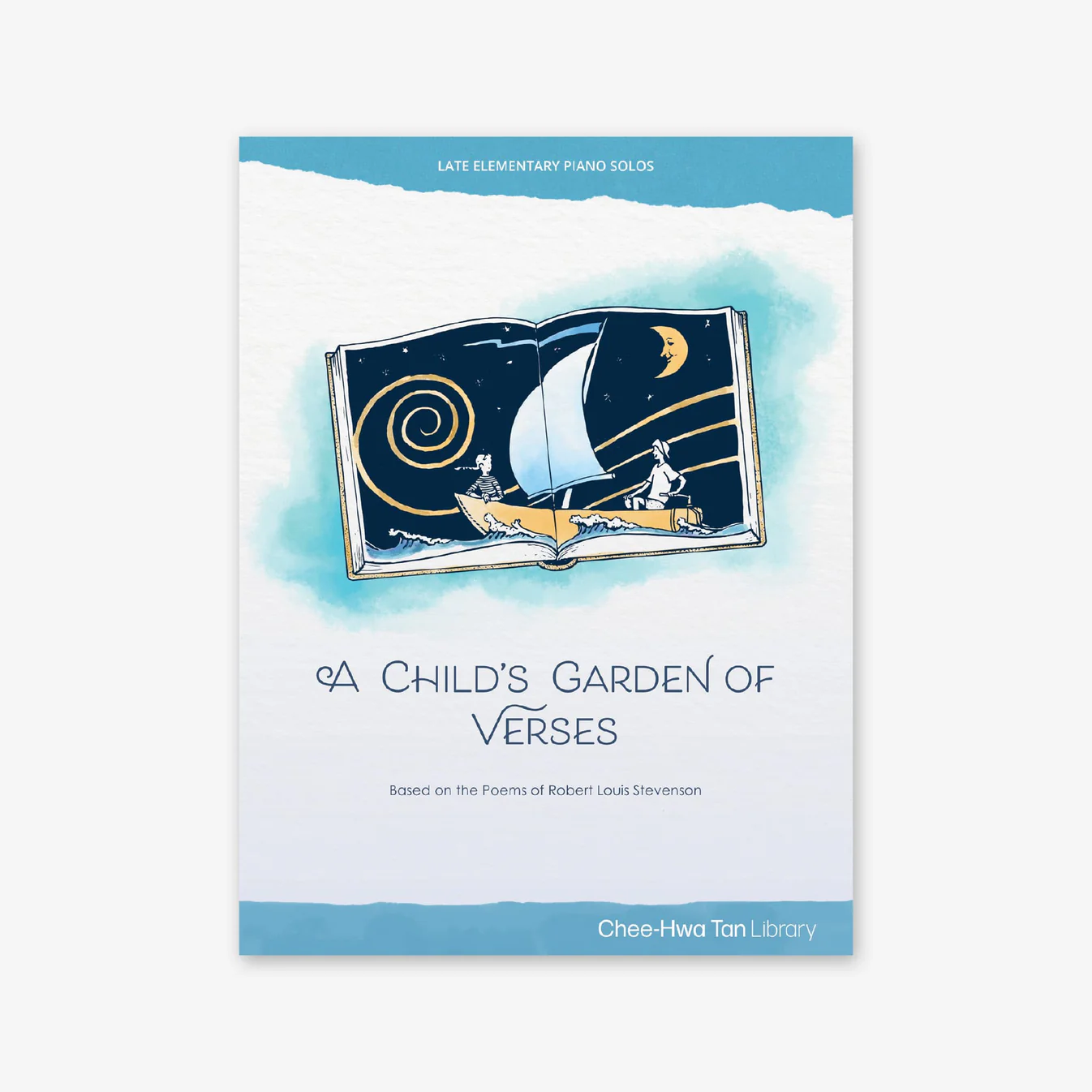
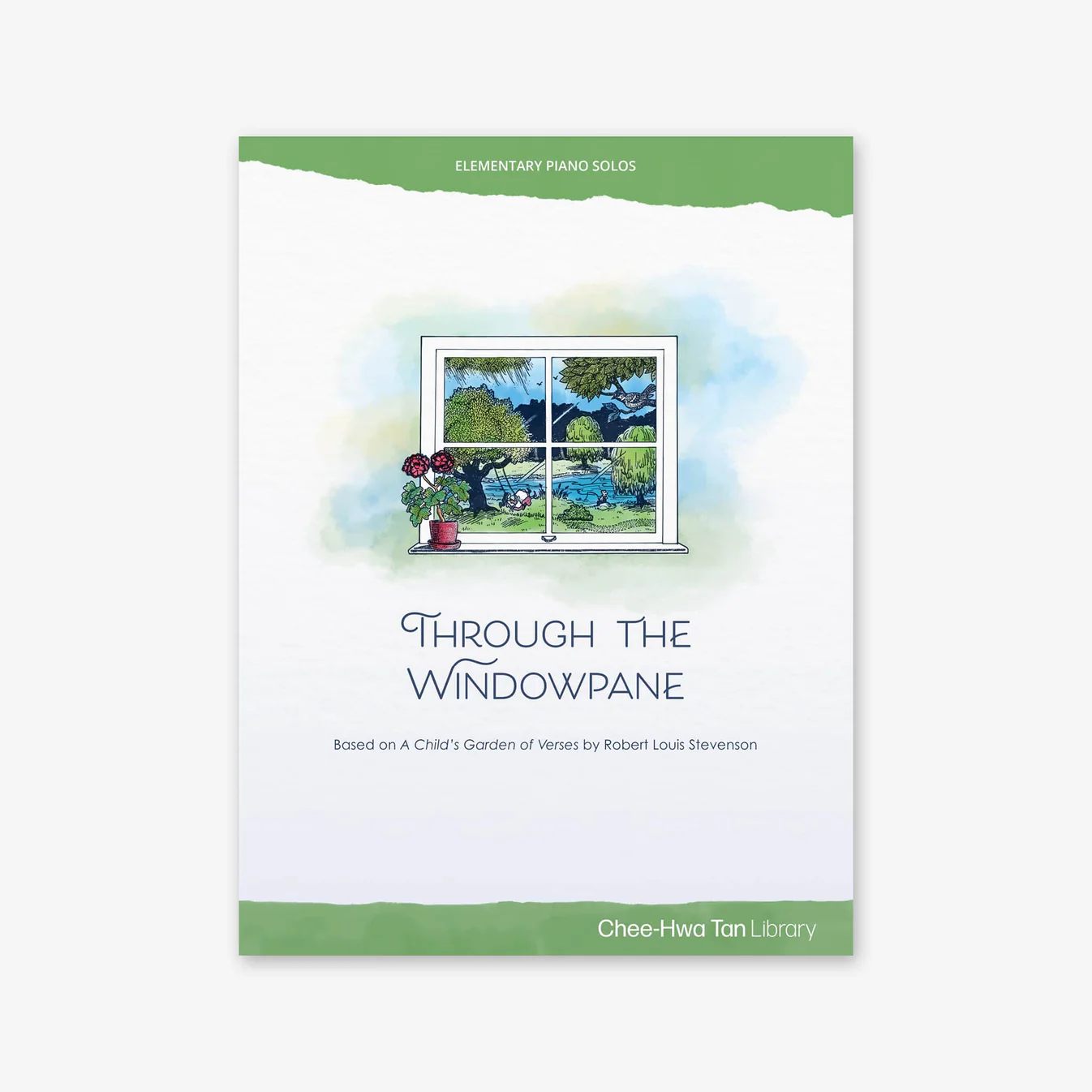
The music featured in this episode is inspired by Robert Louis Stevenson’s beloved collection A Child’s Garden of Verses—poems that take childhood seriously without over-sentimentalizing it. That same spirit can be found in the piano music of composer Chee-Hwa Tan, whose works capture the feelings behind the poetry.
Join me as I perform five of her pieces, ranging from elementary to intermediate level, and discuss their pedagogical value, imagery, and expressive possibilities. These works invite students to engage with imagination— planting musical seeds that can grow over time.
— Transcript —
00:00
Poetryʼs Musical Influence
This week, we’re stepping into a world shaped by poetry and imagination. I’m playing pieces inspired by the poetry of Robert Louis Stevenson. Many of us would know Stevenson as the author of Treasure Island, and Dr.
Jekyll and Mr. Hyde, but it’s his later book of poetry titled A Children’s Garden of Verses that was the inspiration for all of the music that you’re going to hear today. His poems don’t talk down to children.
They take childhood seriously without over-sentimentalizing it. And that same spirit can be found in the piano music of composer Chee-Hwa Tan.
Her pieces don’t attempt to illustrate the poems line by line, but instead they capture the feelings behind them. Feelings that can be understood and appreciated in different ways by children and adults alike.
So let’s spend a little time with the music of Chee-Hwa Tan, inspired by poetry of Robert Louis Stevenson. It’s coming up next on the Piano Pedagogy Playlist. Greetings and welcome to the Piano Pedagogy Playlist.
I hope your day is going well. My name’s Luke Bartolomeo, and I’m a pianist, a teacher, and the developer of music education apps, including Flashnote Derby.
Each Monday on the Piano Pedagogy Playlist, I share some of my current favorites from the contemporary repertoire written especially for piano students. Music that’s both pedagogically sound and musically meaningful.
Today, I’ll be playing five pieces by composer Chee-Hwa Tan, all inspired by the poetry of Robert Louis Stevenson’s A Child’s Garden of Verses.
2:07
The Wind and Land of Nod
Our first piece today is called The Wind. It’s a miniature piece at the elementary level that invites us to feel the breeze on our skin from the opening notes. The melody weaves seamlessly between the hands.
Encouraging students to listen horizontally instead of thinking in terms of right hand versus the left hand or melody versus the accompaniment. There’s a wide dynamic range to explore, from whisper soft up to a bold fortissimo.
And the melodic range spans more than four octaves, giving young students the opportunity to really travel across the keyboard. I’m pairing that piece with something a little more relaxed.
It’s a piece called The Land of Nod, and it takes its inspiration from Stevenson’s poem about the places our mind takes us to as we drift off to sleep.
In this piece, the left hand gently practices a stride-like motion, alternating bass notes with chords. But at a very slow tempo, and using only G major and F major harmonies.
It’s a beautiful example of introducing an important pianistic skill early, and doing it in a way that feels comfortable rather than intimidating. I invite you to listen to The Wind, followed by The Land of Nod.
6:07
Wintertime and The Swing
Our second pairing consists of two more pieces, also at the elementary level. First, I’ll play Wintertime. It’s a very simple piece built on the pentatonic scale.
It’s played entirely on the black keys. The one note at a time texture allows students to focus on a natural hand position, free of stress, as well as the use of arm weight for healthy tone production.
You can really use the image of walking through deep snow. Heavy boots, slow steps, can’t be in a hurry.
This is probably a piece that you’ll be teaching by rote, since the range extends beyond what most students at this level are comfortable reading. But like always, you can be on the lookout for guide notes and patterns.
There’s always things to notice in the score, even when we’re learning something primarily by ear. After wintertime, I’ll play one of my favorites by Chee-Hwa Tan, The Swing.
It features such a sweet melody, accompanied by a descending diatonic bass line that you could say has become a little bit cliché, but it still almost always works.
Filling out the harmony, the left hand gives the student some practice at interval recognition with some larger intervals, namely fifths, sixths, and sevenths.
I experimented playing The Swing both with and without pedal, and I actually decided I liked it better without pedal. It has more of a childlike, innocent quality to it. Here is Wintertime followed by The Swing.
Music by Chee-Hwa Tan. I think that last piece that I just played, the swing, is just the right length. Oftentimes, pieces at this level include a B section, a new theme, and it can be a lot for a student who might be feeling challenged already.
By keeping it short and simple, this piece remains a good challenge piece for a young elementary level student, without running the risk of them getting bogged down in something that’s just too long.
10:33
Windy Nights Performance
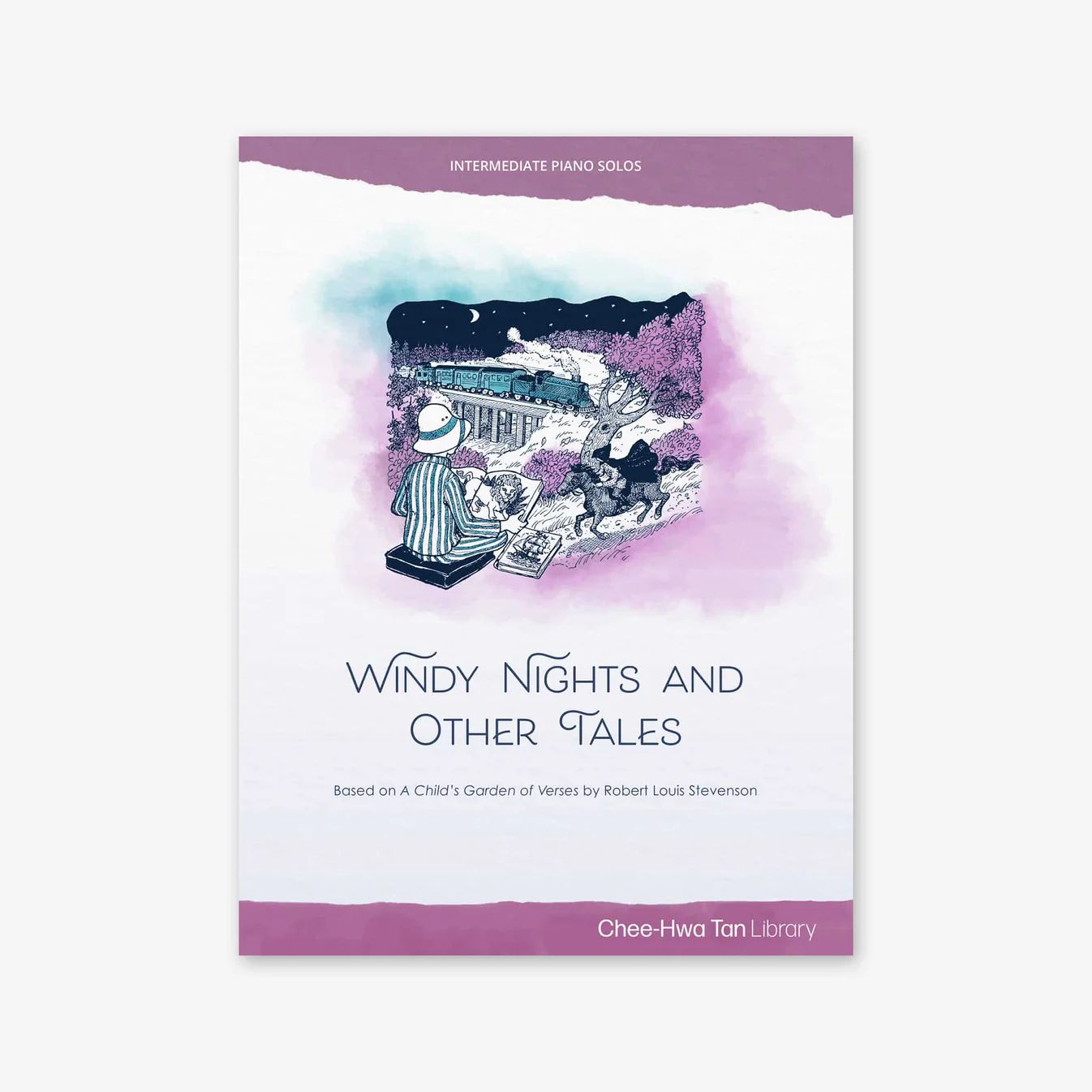
We have one final piece today on the program. It’s called Windy Nights. It is a dramatic show piece for intermediate level students.
It’s a perpetual motion type piece with just enough catch-your-breath moments. The intensity ebbs and flows, building towards a fiery, exhilarating ending. There’s a lot going on with this piece, but beneath it all, there are a lot of patterns.
And that makes this piece considerably easier to learn than it might first appear.
Today, we listened to five pieces by composer Chee-Hwa Tan, drawn from three different collections, all inspired by the poetry of Robert Louis Stevenson’s A Child’s Garden of Verses.
12:34
Composer and Reflection
Chee-Hwa Tan is a Malaysian-born composer and pianist who’s made her professional career in the United States.
She’s taught on the piano pedagogy faculty at institutions, including the University of Denver, the Oberlin Conservatory, Southern Methodist University, and most recently, the University of Colorado.
Her works often draw inspiration from poetry, nature, and storytelling, inviting students to exercise their musical imaginations.
You’ll find links to all of the pieces today in the episode description, or you can visit us online at pianopedagogyplaylist.com for more information. And just like that, it’s time to close the lid on today’s episode of the Piano Pedagogy Playlist.
I’ll leave you today with a line from Stevenson that feels especially fitting for us as teachers. He writes, Don’t judge each day by the harvest you reap, but by the seeds that you plant.
And what are we doing in our studios every single day if not planting seeds? I’ll look forward to being back with you next Monday when I’ll share more of my current favorites from the contemporary piano teacher’s repertoire.
Until then, keep nurturing the music, and have a wonderful week.
Leave a Reply