
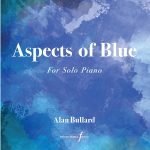

Three pieces this week from the collection Aspects of Blue by Alan Bullard, all at an intermediate level.
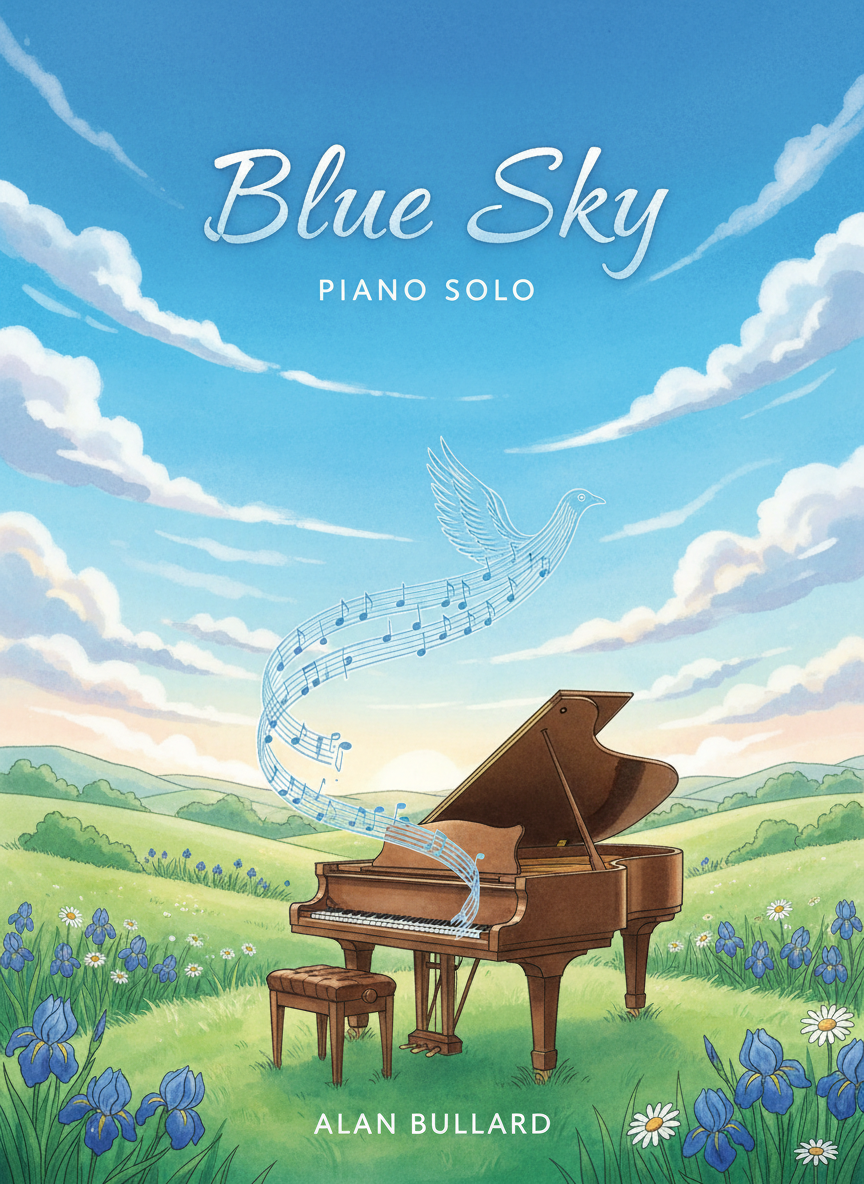
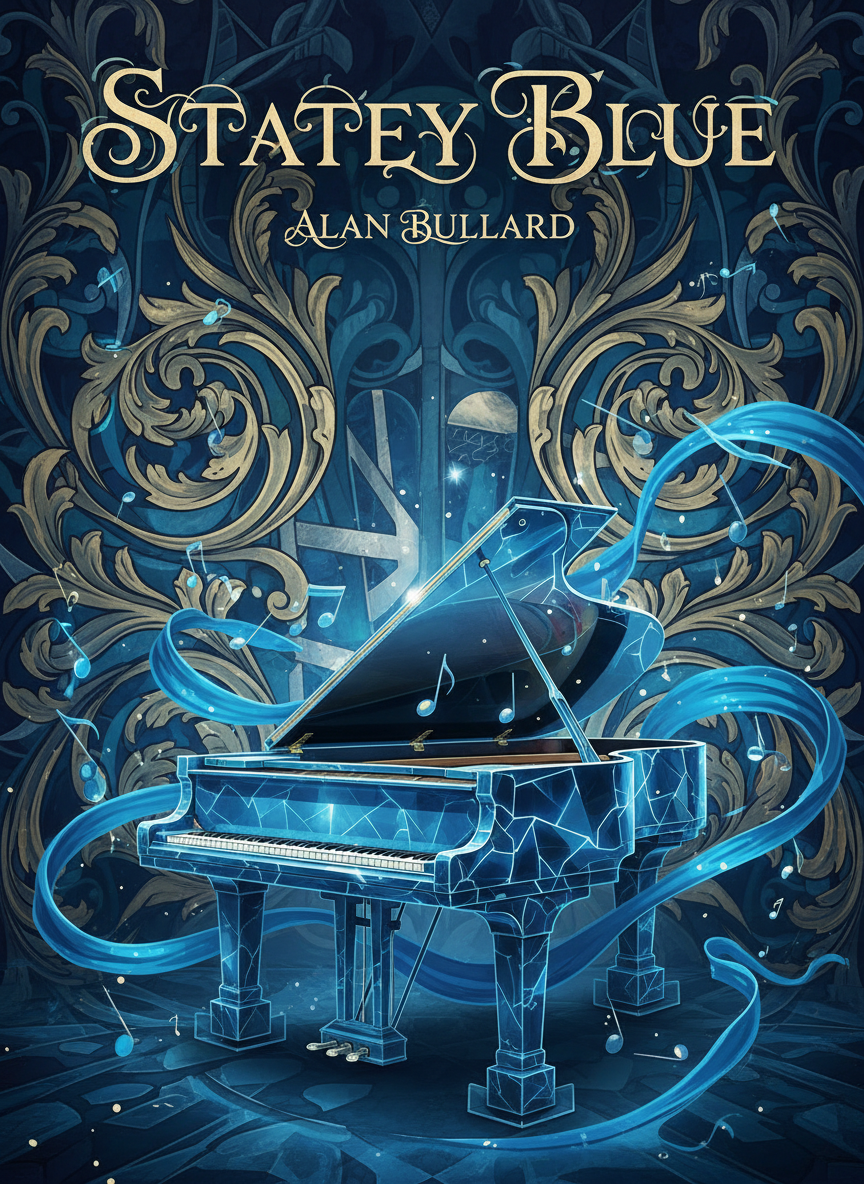
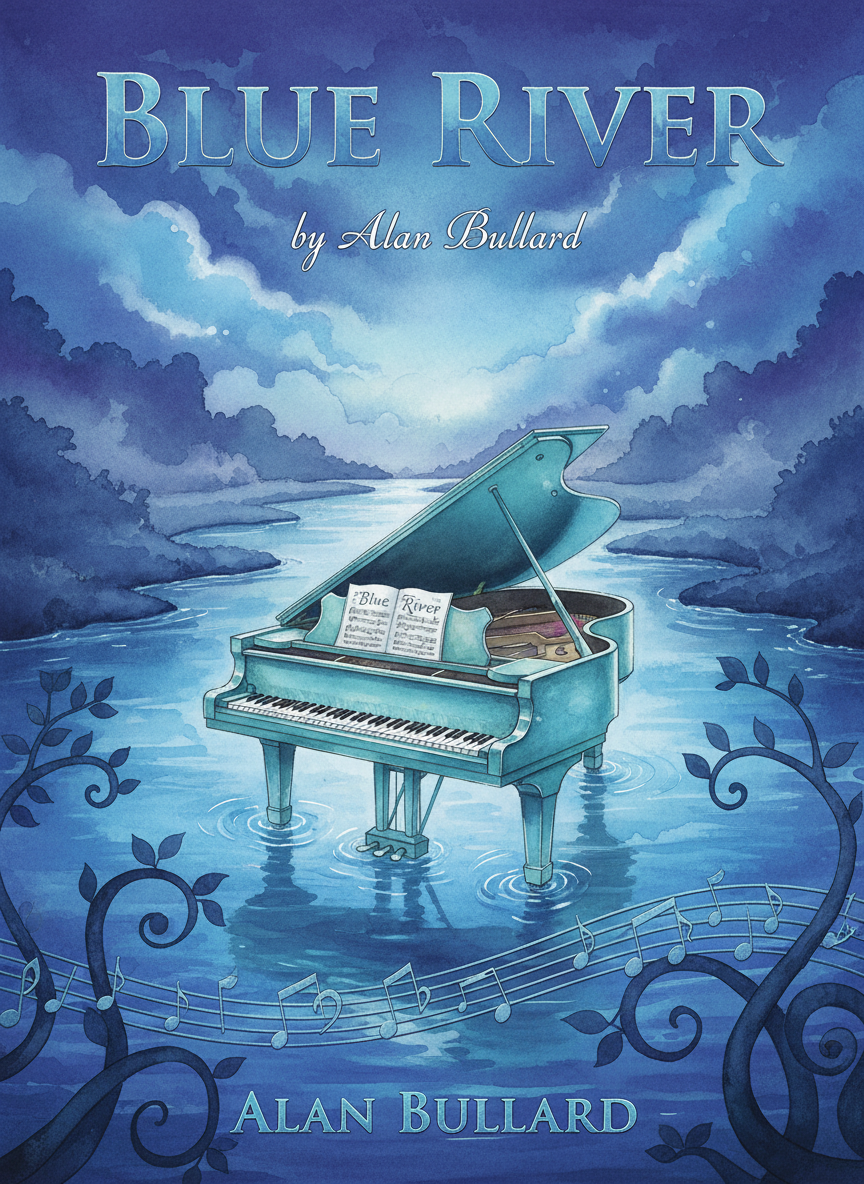
This week, we dive into Alan Bullard’s Aspects of Blue—a collection that takes the familiar 12-bar blues chord progression and reimagines it in completely unexpected ways. These aren’t blues pieces, but character pieces that use the form as a creative framework.
You’ll hear Blue Sky, Stately Blue, and Blue River: three intermediate-level works that explore calm lyricism, Baroque-inspired elegance, and flowing rhythmic interplay. This ain’t the blues, but it is wonderfully imaginative.
— Transcript —
The holidays can sometimes usher in a feeling of the blues, that can’t always be explained. Not sadness necessarily, but a reflective tone that settles in as the year winds down.
Maybe that’s why I found myself drawn to a collection this week that plays with the idea of blue in an unexpected way. It’s called Aspects of Blue by Alan Bullard. And what hooked me really is the inspiration behind the collection.
Each piece is built using the traditional 12 bar blues chord progression. Yet none of these pieces really resemble the blues in terms of their style and attitude.
Instead, each piece takes that familiar chord structure and explores a unique musical character, almost as if Bullard challenged himself to prove how much he could say within the limiting constraints of this structure.
Today, I’m sharing three intermediate level selections from the set, each one possessing the same basic progression of chords, but with vastly different results. Three Aspects of Blue straight ahead on the Piano Pedagogy Playlist.
Greetings, my fellow keyboard companions. I hope your day is going well. My name is Luke Bartolomeo.
I’m a pianist, a teacher, and also a developer of music education apps, including Flashnote Derby. Each Monday here on the podcast, I play some of my current favorites from the contemporary repertoire for piano students, written by living composers.
Thanks for joining me. The first piece we’re going to hear today is called Blue Sky. Every composition in this collection uses blue in its title somehow, and this one really feels like its name, spacious and easygoing.
Now, just to review what the 12-bar blues actually is, the chord progression uses only the tonic, subdominant, and dominant chords of a given key, also referred to by their Roman numeral equivalents 1, 4, and 5.
The 12 measures of the structure could be seen as consisting of three phrases, four measures each. The first phrase uses only the tonic chord, so we have four measures of the one chord.
The second phrase begins away from home on the subdominant chord, and has two measures of four, followed by two measures of one.
The final phrase, probably the most characteristic, in that it starts on the dominant chord, a chord which usually resolves directly to the tonic, but in this case moves backwards to the subdominant chord, and from there moves to the tonic in a
process called retrograde. And I think now I’ve succeeded in taking something very familiar and very basic, and making it sound like something very academic and confusing. But fear not.
Even if you don’t recognize the blues progression in this piece at first, there will be at least a couple of moments where the progression should become pretty obvious and familiar. Here’s Blue Sky by Alan Bullard.
Did you catch the five chord moving backwards to the four chord? That word retrograde can sound pretty scary, but you know it when you hear it.
Next up, I’m playing a piece called Stately Blue, which goes way back to the Baroque era for its inspiration. Specifically, a dance from the 1700s called the Sarabande.
You’ll hear the typical slow and stately attitude and triple meter that all Sarabandes possess. And Bullard also adopts the classic Sarabande rhythm with an emphasis on the second beat of each measure, and oftentimes a rest on beat three.
The chords are treated in a fairly typical Baroque fashion, but there are a few moments where I have to wonder what Bach or Handel would have thought of the flatted thirds and sevenths. I think once the shock wore off, they would have come around.
Personally, I think it’s great. Here’s Stately Blue by Alan Bullard. I really like that piece.
Immediately recognizable as a sarabande, and definitely not a sarabande at the same time. That was Stately Blue by Alan Bullard. The final piece today is called Blue River.
On the page, the rhythms in this piece look heavily syncopated, but that’s just on the surface. What’s actually created is two different rhythmic currents flowing alongside each other.
A gentle, continuous two against three feel that gives the piece its watery motion. When I was practicing it, I found myself tempted to keep pushing the tempo beyond the printed marking of quarter note equals about 176.
Then I found a recording of a performance online that somewhat validated my instincts. And to top it off, it was the composer himself playing.
So I feel pretty safe in presenting you with a version that flows a little bit faster than what’s actually indicated in the score. But the piece works very well at a slower student tempo as well. Here’s Blue River.
Today, we’ve looked at three pieces from Aspects of Blue by Alan Bullard. The full collection contains seven short pieces, all just two or three pages each.
And each one is a creative experiment in using the classic 12-bar blues progression as a structural backbone. Even when the resulting music shares little in common with the style we think of when we think of blues music.
One of the pieces in the book that I didn’t play today called Electric Blue actually does have a bit of the style and feel of the blues. But don’t assign these pieces because a student is interested in blues music.
I wouldn’t even call these pieces inspired by the blues. It’s rather the composer making an intentional choice to use this familiar and very popular chord progression in novel and in some cases completely unrelated ways.
Aspects of Blue is available as a single use digital download, a studio license download, or a traditional print copy. There are links in the episode description as well as on our website, pianopedagogyplaylist.com.
And just like that, we have to close the lid on today’s episode of the Piano Pedagogy Playlist. I hope your week stays groovy and that the only blues you experience are strictly the musical kind.
I’ll look forward to seeing you next Monday with more of my current favorites from the contemporary piano teacher’s repertoire. Until then, keep nurturing the music and have a great week.

Leave a Reply