

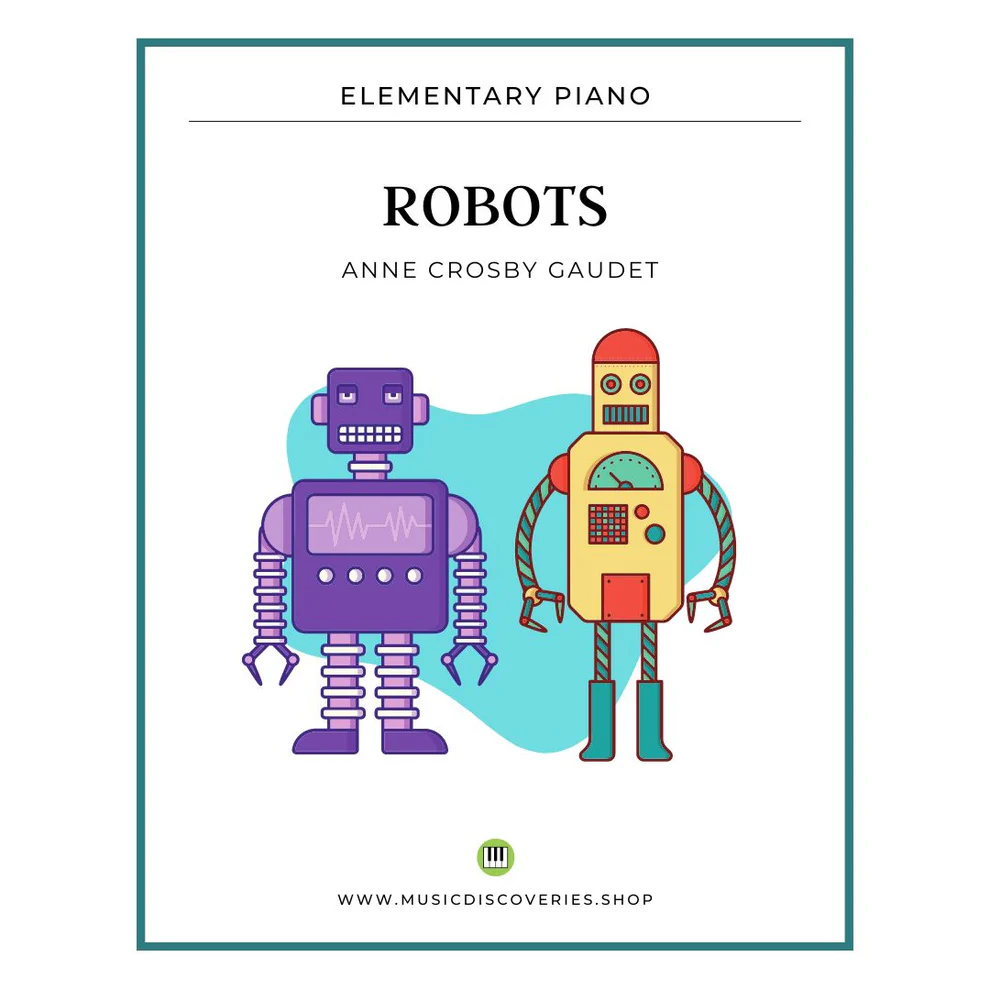
Robots
Anne Crosby Gaudet Elementary
Digital Download
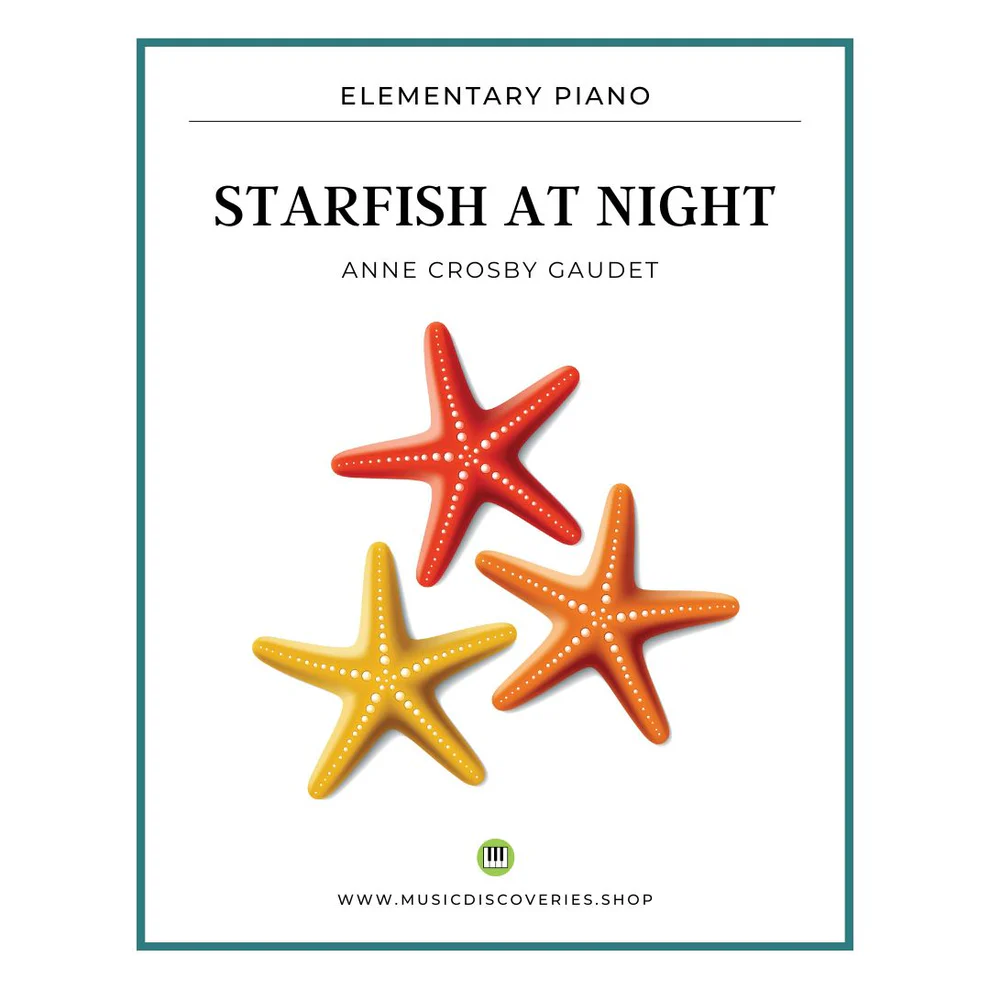
Starfish at Night
Anne Crosby Gaudet Elementary
Digital Download
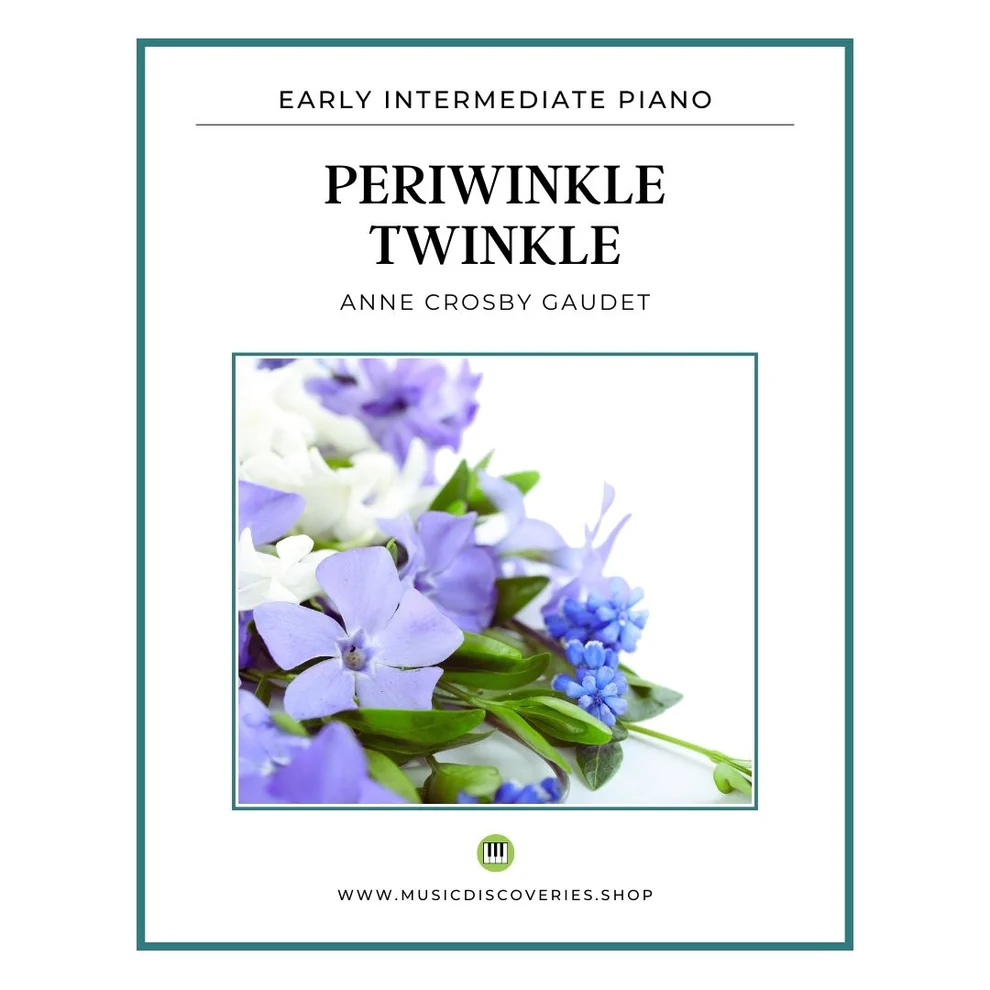
Periwinkle Twinkle
Anne Crosby Gaudet Early Intermediate
Digital Download

Funny Puppy
Anne Crosby Gaudet Early Intermediate
Digital Download
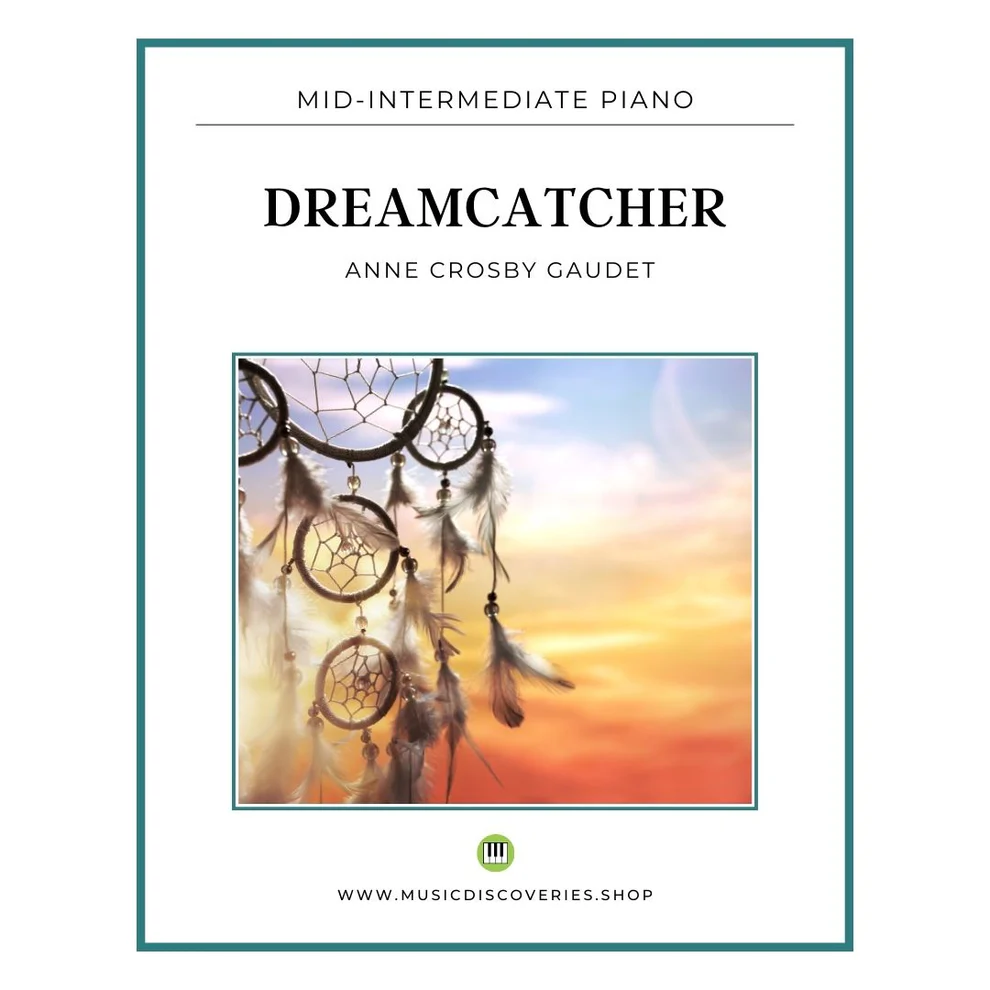
Dreamcatcher
Anne Crosby Gaudet Intermediate
Digital Download
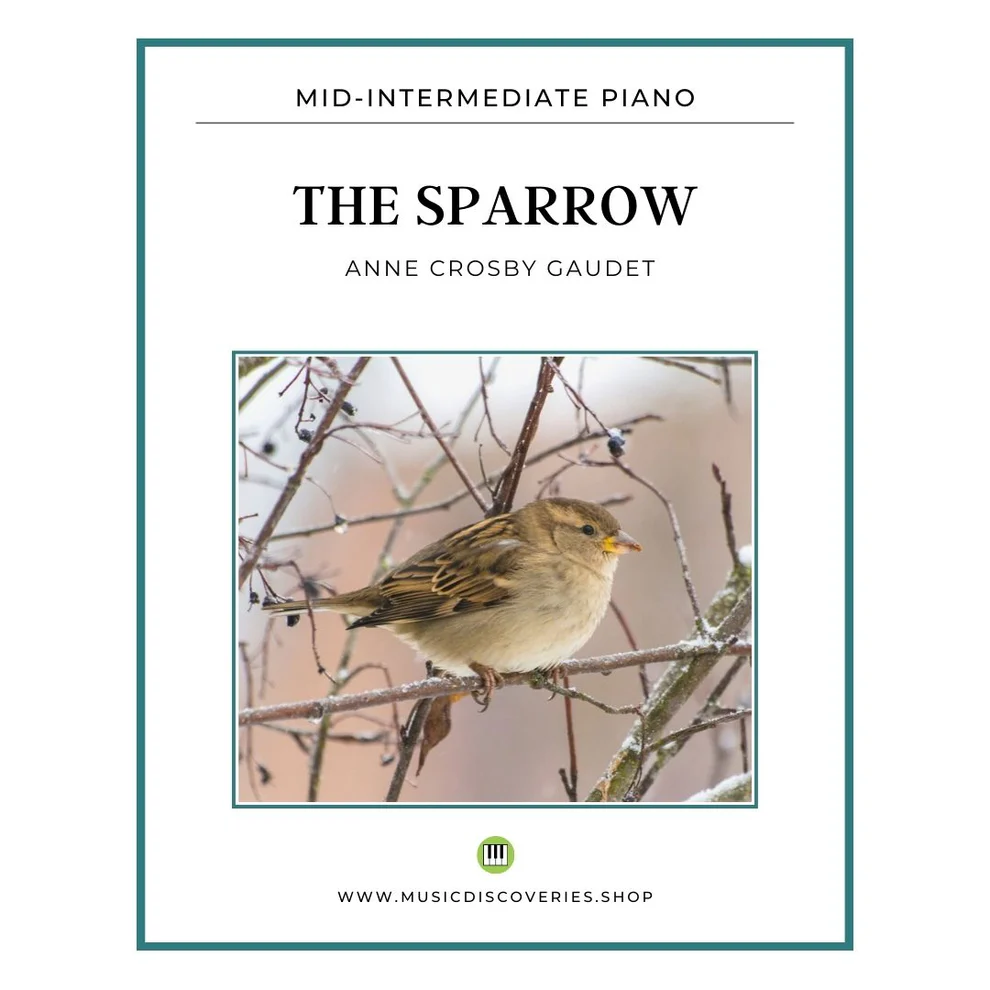
The Sparrow
Anne Crosby Gaudet Intermediate
Digital Download
Robots, starfish, puppies, dreamcatchers- they all live in the imaginative world of Canadian composer Anne Crosby Gaudet — a teacher/composer whose music is playful and colorful, as well as brilliant in the way it develops students.
In this episode, I share six of her pieces for elementary through intermediate pianists: Robots, Starfish at Night, Periwinkle Twinkle, Playful Puppy, Dreamcatcher, and The Sparrow.
There’s a little bit of something for everyone today, including one especially satisfying intermediate piece that often feels like a real “level-up” moment for students.
If you’re looking to expand your teaching repertoire with music that builds technique without ever feeling like an exercise, I think you’ll really enjoy the music of Anne Crosby Gaudet.
— Transcript —
What do tone clusters, glissandos with your sweater sleeve, and robots with impeccable timing all have in common?
They all live in the imaginative world of Anne Crosby Gaudet, a composer whose music is playful without being simplistic, and pedagogically rich without ever feeling like an exercise. You’re in for some color, character, and creativity.
Coming up today on the Piano Pedagogy Playlist. Greetings and welcome! I hope your week is off to a beautiful start.
My name is Luke Bartolomeo, I’m a pianist, a teacher, and a developer of apps for music education, including Flashnote Derby.
Each Monday I share some of my current favorites from the contemporary repertoire written for piano students by living composers. Today’s episode is a bit of a deep dive. I’m featuring the music of just one composer, the Canadian Anne Crosby Gaudet.
In addition to being a composer, Ms. Gaudet is also a teacher and a clinician. And that dual identity really comes through in her writing.
Her pieces feel like they were born in a music studio slash laboratory, made with a clear understanding of how students think and learn at the piano.
There’s plenty of imagination too, of course, but also careful pacing of technical challenges that comes only from plenty of experience working with students.
1:49
Elementary Repertoire
I’ll be playing six of her pieces today, ranging from elementary through intermediate levels. And I’ll begin with two elementary pieces that I have taught for years.
They actually make a fantastic pairing together because they work at cultivating completely different, almost opposite, musical instincts. First is robots. It’s mechanically rhythmic.
Students can vividly hear the robots performing their tasks with absolute precision. The crisp articulation builds rhythmic control and finger independence.
And then there are playful tone clusters scattered about that lighten the mood with just a touch of chaos. And then there’s a tiny slice of a chromatic scale in contrary motion.
But it’s the friendly kind of contrary motion, where the black and the white patterns match in both hands. Then we’ll move on to the second piece, Starfish at Night, which couldn’t be more different. It’s leisurely and atmospheric.
There’s rhythmic freedom. Glissandos across the black keys, whole-tone scales that evoke floating. Perhaps even the quiet shimmer of moonlight underwater.
Here’s Robots, followed by Starfish at Night. Whenever I teach those black key glissandos, there are inevitably complaints from the student, oh, it hurts.
So we talk about the angle of attack, reducing downward pressure, making contact with the nail rather than the skin. But I once had this student who absolutely refused to play them, unless he pulled his long sleeve down over his hand for cushioning.
I felt a little guilty about allowing it, like I was breaking some piano teacher rule. But then imagine my delight when I came across a video of the composer herself suggesting that very technique.
In the end, it’s the sound that matters, and for young students, that sleeve method often produces a smoother glissando. Of course now, this same student chose Starfish at Night for his spring recital piece. The day of the recital?
The first really warm day of the season. Short sleeves. And it didn’t dawn on him until he was sitting at the piano.
But he rose to the occasion and suffered admirably.
6:14
Early Intermediate Works
Our next pair of pieces moves into early intermediate territory. I love the name of this first piece, Periwinkle Twinkle. It has a jazzy flavor with syncopated rhythms and a buoyant character.
Interestingly, my students rarely struggle with counting the rhythms hands separately. The real challenge is physically coordinating the hands together.
And one strategy that’s helped in my studio is having the student tap each hand’s independent rhythm simultaneously on the fallboard of the piano or on their lap.
It isolates the rhythmic coordination before worrying about specific notes on the keyboard. Then comes a perennial studio favorite, Funny Puppy. It’s got boundless energy, driving staccato chords in the left hand, and a spirited melody in the right.
And there’s a charming legato middle section where the puppy begins to get tired. A brief pause, and then he’s off again.
We even get some more of those whimsical tone clusters, and a few measures in 7-8, which sneak in some asymmetrical meter in a way students find completely delightful. Two early intermediate pieces, Periwinkle Twinkle, and Funny Puppy.
This final set is for more solid intermediate-level students.
9:05
Intermediate Level Pieces
Dreamcatcher is one of my all-time favorites. I’m teaching it right now, actually, and I’m observing something I’ve seen before.
When students begin to create the layered washes of sound in the left hand, in the second half of this piece, it’s like they can feel themselves leveling up, so to speak. It becomes for them a milestone piece.
Something about its texture and sound world, it signals a new level of maturity in their playing. And I don’t have to point it out to them. They hear it themselves.
Then I’ll close with the only piece that was completely new to me before preparing this episode, and I’m so glad that I found it. The Sparrow.
It features a fluttering melodic figure, and gentle syncopation that feels different from the jazzy syncopation earlier. There’s lightness, a sense of anticipation. It makes me just a little excited for the promise of spring.
Here’s our final set for today. First Dreamcatcher, and then The Sparrow. Anne Crosby Gaudet’s contribution to the student repertoire lies in her ability to balance imagination with structure.
Her music invites students into vivid worlds with relatable characters, robots, starfish and puppies, while quietly building technique, coordination, tone and rhythm. If you’re unfamiliar with her works, they’re absolutely worth exploring.
As always, links to the pieces I played today, as well as more info about the composer, are available in the episode description, or by visiting the website pianopedagogyplaylist.com.
And just like that, we have to close the lid on today’s episode of the Piano Pedagogy Playlist. You may remember last week I mentioned an update to my note naming horse racing app, Flashnote Derby.
As a little reward for making it all the way to the end of this episode, I’d like to offer you a free download if you’re interested. If you have students who could use a little boost in speed and accuracy with note recognition, here’s how to get it.
Visit pianopedagogyplaylist.com and navigate to episode 28. On that page, just sign up for our free newsletter. I promise you, it’s very unobtrusive.
Basically, just updates about new episodes when they come out. Then I’ll send you a promo code you can use for a free download of FlashNote Derby.
To important notes, I have a limited number of codes, so this is only available to the first dozen teachers who respond. And this particular offer is for Apple device users only, so iPhone and iPad.
Again, just go online, episode 28, sign up for the newsletter. And I’ll look forward to seeing you all again next Monday, when I share some more of my current favorites from the Contemporary Piano Teachers Repertoire.
Until then, keep nurturing the music, and have a wonderful week.

Leave a Reply