

Valse Sentimentale
Catherine Rollin Intermediate
Digital Download
Printed Edition
Midnight Waltz
Julie Ann Ballard Early Intermediate
Digital Download
Printed Edition
Vals Romántico
Martín Cuéllar Late Intermediate
Digital Download
Printed Edition
More by Martín Cuéllar
The waltz is one of the most enduring musical forms in Western music. First popular in the late 18th century, it has outlasted powdered wigs, pet rocks, fidget spinners, and even the 6-7 craze — and composers are still writing waltzes today.
In this episode, I play three contemporary waltzes for intermediate piano students, each with a very different personality. All three happen to be in the key of A, two in major and one in minor, and each one shows a different way this classic dance form continues to live on in today’s teaching repertoire.
We begin with the expressive and flexible Valse Sentimentale by Catherine Rollin, a stylized waltz full of rubato and Impressionist color.
Next is Midnight Waltz by Julie Ann Ballard, a reflective minor-key piece that works beautifully for tone and phrasing at the early intermediate level.
Finally, Vals Romántico by Martin Cuéllar brings us back to A major with a lyrical, romantic waltz that challenges students to navigate a roaming left hand while maintaining a relaxed tempo.
These pieces are excellent additions to the teaching studio and show how the waltz continues to be a vibrant and useful form in contemporary piano literature.
— Transcript —
The waltz. It’s one of the most enduring forms in Western music. Its origin dates back to the late 1700s, and composers are still writing waltzes today.
Which means they’ve outlasted powdered wigs, pet rocks, fidget spinners, and that whole deal with the 6-7, the waltz endures. For this episode, I pick three waltzes for early, mid, and late intermediate students by three different composers.
Today’s selections all have a few things in common. They’re all in the key of A, two in A major, one in A minor, and somewhat not-so coincidentally, they all end on exactly the same note in the same octave. The waltz.
Graceful, sentimental, occasionally dramatic. Coming up on the Piano Pedagogy Playlist. Greetings and welcome.
I hope your day is going well. My name is Luke Bartolomeo. I’m a pianist, a teacher, and also the developer of apps for music education, including Flashnote Derby.
Each Monday, I play for you some of my current favorites from the contemporary repertoire of piano music written for students. Music by living composers that deserves to be heard, shared and taught. Today, we’re listening to Waltz’s.
Appropriately enough, three of them, each with a very different personality.
Back in the late 18th century, the dance which had become known as the Waltz was considered a little scandalous because couples were dancing in a closed position, which at the time was a shocking idea and a little too exciting for polite society.
Of course today, the Waltz brings to mind a dance that is somewhat formal and old-fashioned. Most of us are more likely to experience it in its musical form, rather than gliding across a ballroom floor.
But the sense of motion and that gentle, lilting quality that Three Four Time provides are still very much part of the musical picture.
2:25
Catherine Rollinʼs Waltz
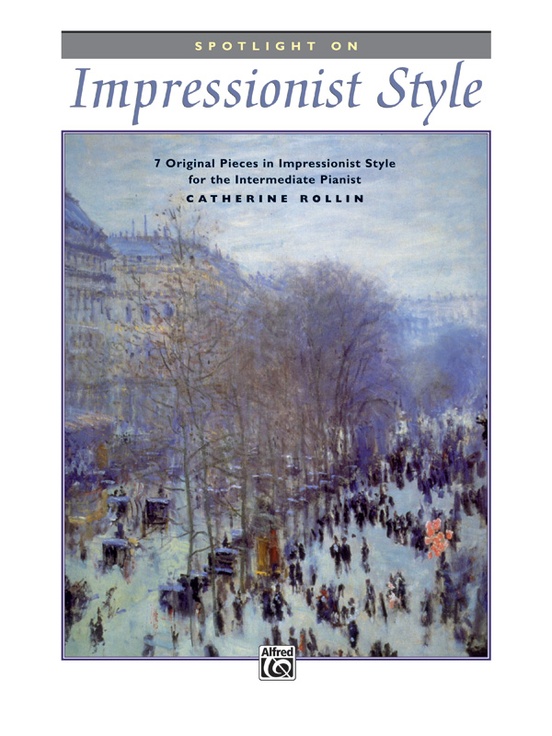
First up on our program today, we have Catherine Rollin’s Vals Sentimentale, or Sentimental Waltz, written for mid-intermediate level students. It’s from her collection Spotlight on Impressionist Style.
And this piece has a kind of French cafe atmosphere. I’ve always loved this piece. One thing I especially appreciate is how carefully the rubato is indicated in the score.
Instead of just saying with rubato and leaving everything up to the student, who might have very different ideas about how rubato should be worked out in such a piece, Rollin explicitly shows where the music should push ahead and where it should pull
back. The execution really should be demonstrated by the teacher, to illustrate how to make it all seem natural and integrated. Here is Vals Sentimentale by Catherine Rollin. Listening to that piece, you can hear it’s really more of a stylized waltz.
With the tempo shifting that much, it wouldn’t be very practical for actual dancing. You’d end up with a lot of bruised shoulders and stepped on toes. But musically, it absolutely captures that swaying, circular feeling that makes a waltz a waltz.
5:28
Julie Ballardʼs Waltz
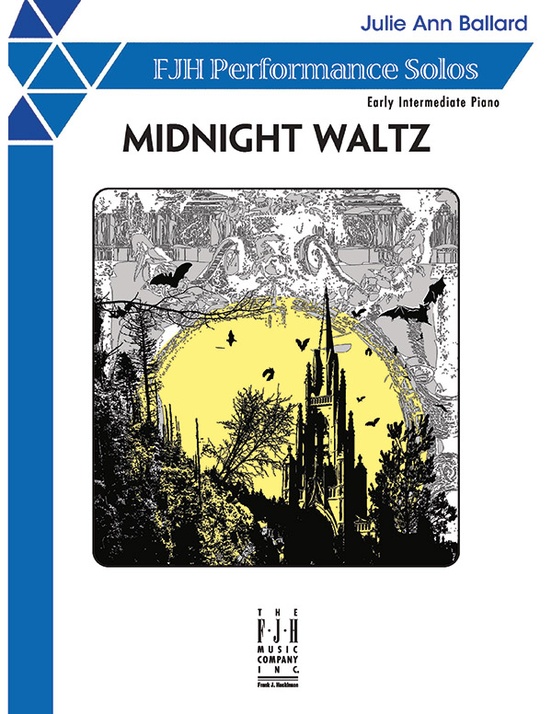
Our second selection today is Midnight Waltz by Julie Ann Ballard, written for early intermediate students. Her waltz has a descending bass line that’s slightly reminiscent of the waltz we just heard, but the mood here is completely different.
This time we’re in a minor, and the bass line moves by half steps, which gives the music a darker or at least a more reflective feeling.
The melody itself is quite simple, which makes this a great piece for working on tone production and shaping phrases of varying lengths.
We’re leaving Carefree Cafe Life for something more introspective, maybe a little mysterious, like the title suggests. Here’s Midnight Waltz by Julie Ann Ballard.
7:46
Martín Cuéllarʼs Waltz
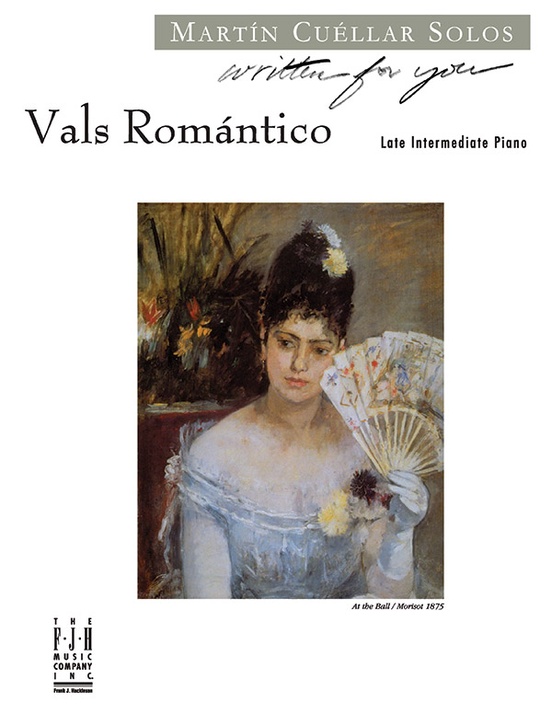
We’ve reached our third and final waltz for today. It’s the Vals Romántico, or Romantic Waltz, by Martín Cuéllar, for late intermediate level students.
We’re back in A major for this one, back to a brighter mood, but with a very different kind of energy. You might remember I played some of Mr.
Cuéllar’s compositions on the podcast back in January, but this one is actually the first piece that introduced me to his music, and I’ve had a fondness for it ever since.
One thing, though, I always have to remind myself when playing this piece is to not rush. The composer clearly indicates that this is not to be hurried through.
Kind of like how it’s good advice to not jump too quickly into a new romance, but to take things slowly. This waltz is governed by a sense of restraint, but it’s a restraint that feels like it could be abandoned at any moment.
It’s listed for late intermediate level students, but technically the biggest challenge is the left hand, which is relentlessly roaming around the keyboard. It’s a great piece for building confidence in navigating the geography of the bass clef.
I really hope you enjoy Vals Romántico by Martin Cuéllar.
12:49
Three Waltz Recap
Today, I played for you three waltzes in three differing styles. First was the Vals Sentimentale by Catherine Rollin. Then Midnight Waltz by Julie Ann Ballard.
And finally, we had Vals Romántico by Martin Cuéllar. As always, links to where you can purchase these pieces can be found in the episode description or by visiting the website at pianopedagogyplaylist.com.
And just like that, it’s time to close the lid on today’s episode of the Piano Pedagogy Playlist.
And whether your week feels smooth and elegant, or more like you missed the downbeat and are trying to catch up, I hope you can find some time to sit at the piano and maybe take a waltz for a spin.
I’ll look forward to seeing you again next Monday when I’ll play some more of my current favorites from the contemporary piano teacher’s repertoire. Until then, keep nurturing the music, and have a great week!

Leave a Reply