


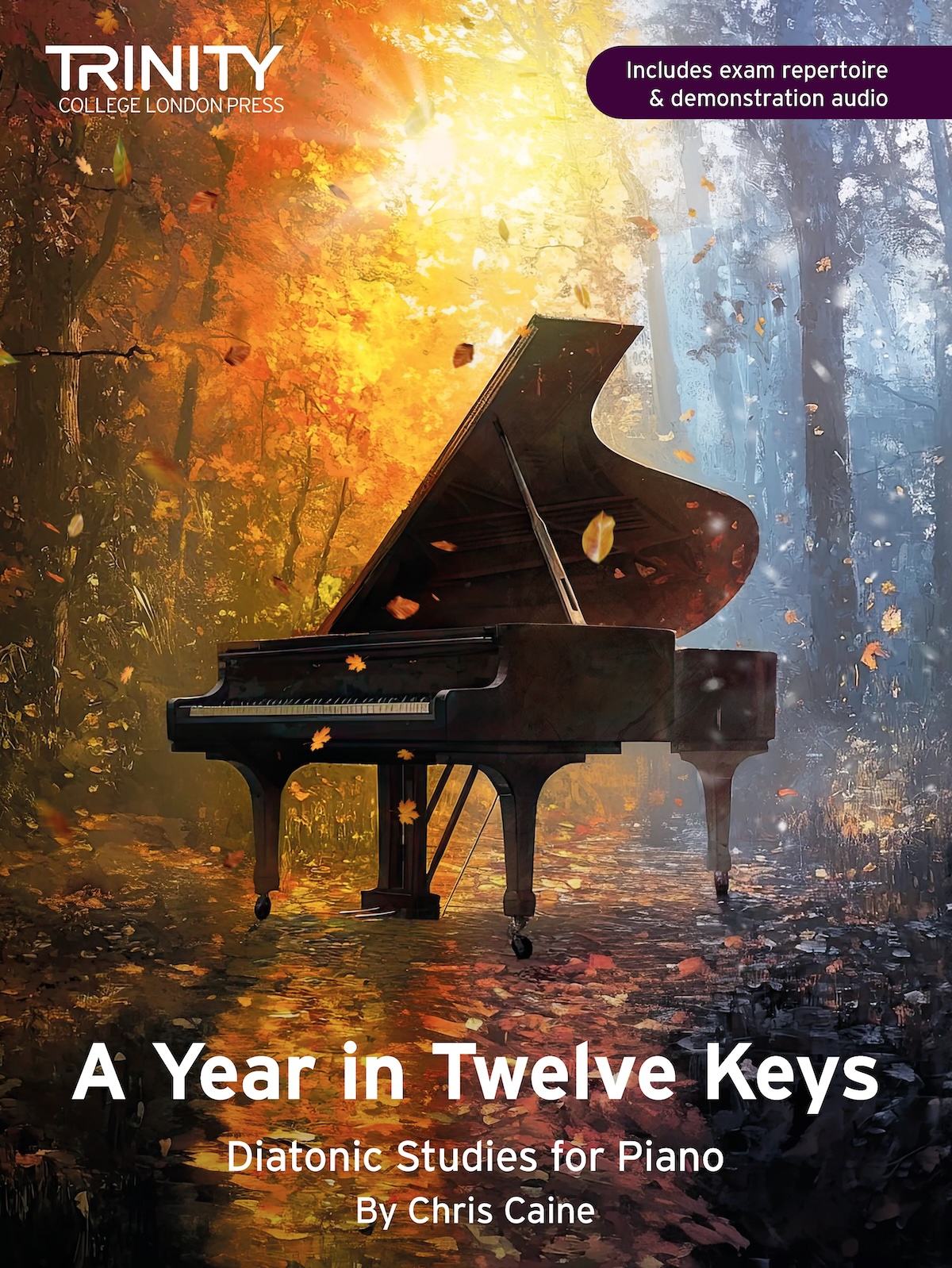
Dance in May (from, A Year in Twelve Keys)
Chris Caine Late Intermediate
Digital Download
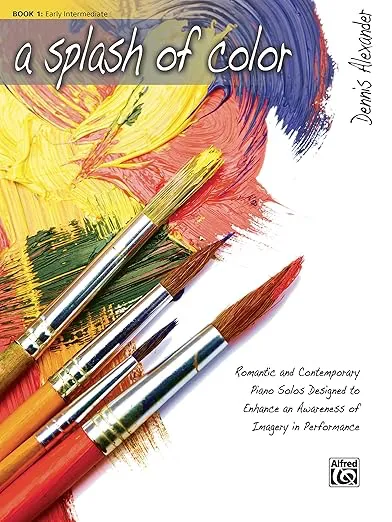
Pink Tulips (from, A Splash of Color)
Dennis Alexander Early Intermediate
Printed Edition
On the first Monday of each month, The Piano Pedagogy Playlist features a piece from Chris Caine’s A Year in Twelve Keys—a collection that explores all twelve key signatures using only the notes within each key.
For May, we turn to Dance in May, an expressive and graceful work in 3/4 time that deliberately avoids the feel of a traditional waltz. Instead, the piece invites students to think in longer phrases—shaping a continuous, legato line while navigating octave writing, carefully choreographed hand-offs of the melody, and nuanced pedaling.
As a companion piece, I’m playing Pink Tulips from “A Splash of Color” by Dennis Alexander. Though significantly simpler from a technical standpoint, it does share a similar sense of motion. Subtle surprises in harmony and phrase length give the piece a sense of expansion and musical curiosity.
Together, these two works offer a thoughtful look at how we can help students develop a sense of flow and expressive timing across different stages of study.
— Transcript —
If you live somewhere where winter is a real thing, then you know the feeling when it finally begins to loosen its grip. There’s a gradual shift, not just in the weather, but in people’s attitudes, in their optimism.
And while April teases us here in Chicagoland with a day here or there of warmth and sunshine, we know we’re not out of the woods yet. Not until we flip the calendar over to May. Then it’s safe for us to believe in the possibility of summer again.
On today’s episode, I’m playing two pieces in full bloom. First, a late intermediate piece called Dance in May, and then an early intermediate piece, Pink Tulips. Two pieces that move with a gentle grace and elegance.
Coming up next on the Piano Pedagogy Playlist. Greetings and welcome. I hope your day is going well.
My name is Luke Bartolomeo. I’m a pianist, a teacher, and also a developer of music education apps, including Flashnote Derby.
Each Monday on the Piano Pedagogy Playlist, we discover new teaching repertoire that’s practical, engaging, and meaningful, all of it written by living composers.
If you’ve been in the audience for the past several months, you know that the first Monday of every month has been dedicated to featuring a piece from composer Chris Caine’s collection, A Year in Twelve Keys.
There’s a piece for each month of the year, and each piece has a different key signature. Mr. Caine has constrained himself to using only the notes of each key, without any accidentals sprinkled in.
So they’re also very useful in helping students feel grounded in a wide variety of keys. This month’s piece is called Dance in May.
2:13
Dance in May Analysis
Caine himself describes it as a leisurely, expressive and graceful dance. It’s in three, four time, but he asks the performer explicitly to avoid any notion of waltz dancing.
Instead, it’s the longer melodic line that he’s interested in, projecting a feeling of one broad beat per measure. That becomes really important from a teaching standpoint, because students will naturally want to organize things beat by beat by beat.
But here, the musical goal is more about shaping a continuous legato line. Something that unfolds over time, rather than being constructed measure by measure.
There’s lots of octaves in this work, and they need to stay relaxed and singing never heavy. And then there’s this tricky seven measure passage that requires some very careful choreography, as the melody is passed back and forth between the hands.
It’s one of those spots where if it’s not handled well, the melody can be swallowed up by the surrounding notes, and then the listener can feel somewhat adrift during those measures.
There are some beautiful rolled chords spanning a tenth in the left hand that require really precise pedaling.
You want the harmony to bloom, but at the same time, you have to be careful to catch those lower notes with the pedal as you roll the chord, as to not clip them.
All of this adds up to a piece that asks for control, patience, and a careful awareness of shaping the sound over time. Here is Dance in May from A Year in Twelve Keys by Chris Caine.
The further we get into this series of 12 pieces, the more I’m impressed by the writing style of Chris Caine.
I should probably say styles, because we’re just five pieces in and we’ve heard a little Broadway, a little Alberti bass, some French impressionistic influence. But I do feel that each of these pieces is genuinely his.
It’s not going out of its way to be unique or trying too hard. So far, they’re all walking that tightrope really well of balancing familiar elements with the unexpected. And we still have seven more to look forward to.
To follow that, I wanted to include something a bit simpler in terms of technical difficulty, but in its own way, kind of similar in spirit. I’m going to play a piece from Dennis Alexander’s collection, A Splash of Color.
7:17
Pink Tulips Exploration
I’ve chosen Pink Tulips. In addition to the title conveying some of the same sentiments as our last piece, it also pairs up quite well from a musical perspective. Once again, we’re in three, four time.
But again, it doesn’t settle into a traditional waltz feel. It leans more towards a feeling of one, two, one, two, with beat three just left hanging in suspension.
It’s a rhythm pattern identical to much of the left-hand accompaniment in Dance in May. True, this next piece is more traditionally lyrical, but there are still some subtle surprises along the way.
One of my favorite moments comes near the end, where after several very predictable phrase lengths, there’s a phrase that just keeps going, spinning out for a couple of extra measures.
It’s a small thing, but it gives the piece a nice sense of arrival right at the very end. Here is Pink Tulips by Dennis Alexander. As I mentioned, that piece, Pink Tulips, is from Dennis Alexander’s A Splash of Color.
It’s a book I’ve had in my library for a long time.
It’s one I remember from my early days of teaching, and it was one of those books that really opened my eyes to the reality that there was a lot of great music still being written for the piano that was also accessible to students and that some of
them could connect with in a way that they didn’t always with their sonatinas and such. Not throwing shade towards sonatinas.
It’s just I think of this book as being one that really drove home to me the effectiveness of a varied musical diet for my students.
As always, I have links to where you can purchase both A Year in Twelve Keys by Chris Caine, as well as A Splash of Color by Dennis Alexander. You’ll find them in the episode description.
Or discover these pieces along with those from our previous 37 episodes at pianopedagogyplaylist.com. And just like that, it’s time to close the lid on today’s episode of the Piano Pedagogy Playlist.
This week’s pieces reminded me that not everything needs to push forward. Sometimes the most compelling music likes to linger and allow each phrase to find its meaning. And that it’s always worthwhile to stop and smell the tulips.
I’ll look forward to seeing you again next Monday when I’ll share some more of my current favorites from the contemporary piano teacher’s repertoire Until then, keep nurturing the music. Have a great week.

Leave a Reply