


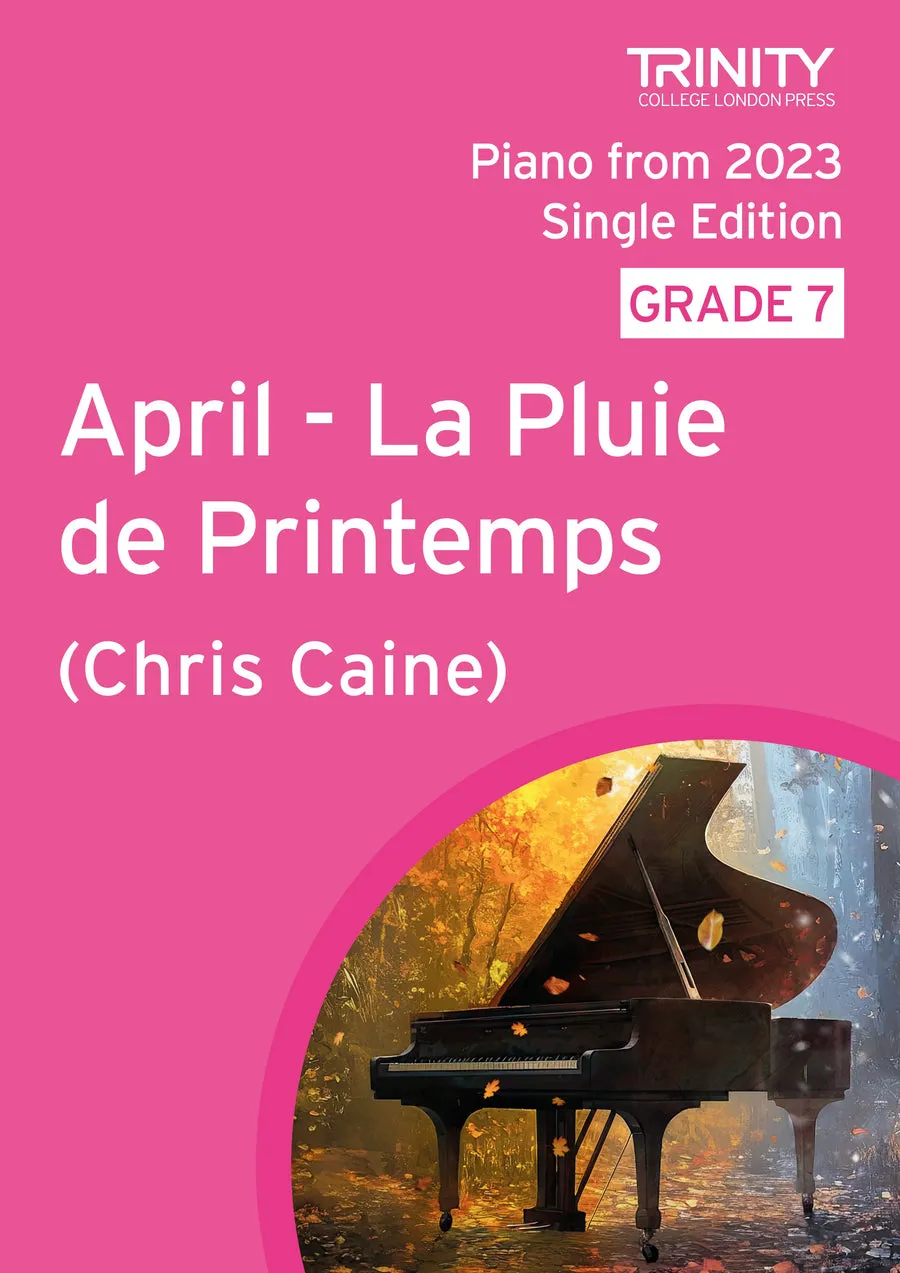
April: La Pluie de Printemps (from A Year in Twelve Keys)
Chris Caine Advanced
Digital Download Single Piece or Entire Collection
Hear the first three works in this series from previous episodes: January, February, and March.
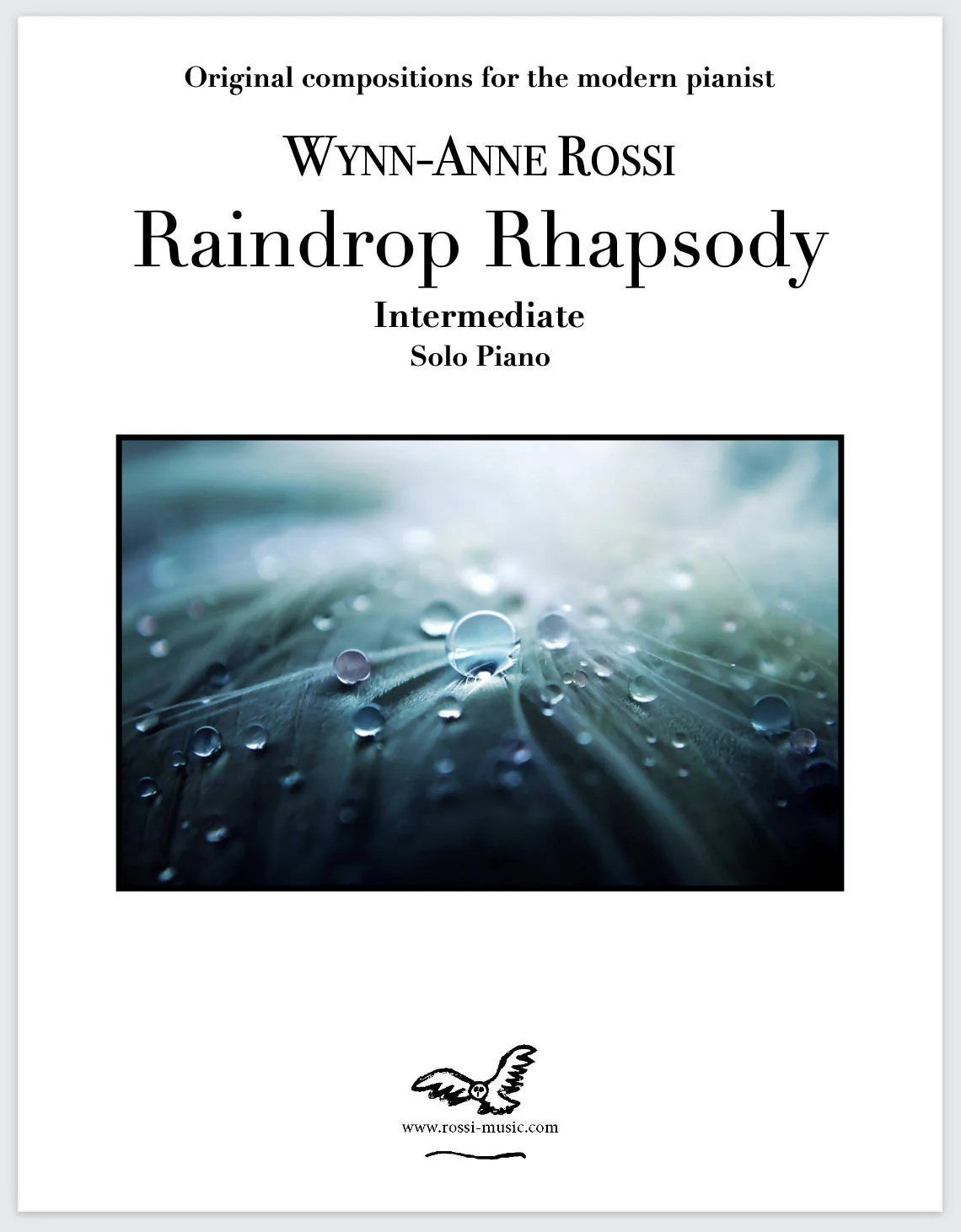
Raindrop Rhapsody
Wynn-Anne Rossi Late Intermediate
Digital Download
Spring rain provides the inspiration for this week’s episode of The Piano Pedagogy Playlist, as I explore two contemporary piano pieces that capture its sound, motion, and atmosphere in very different ways.
I begin with April – La pluie de printemps (Spring Rain) by Chris Caine, an advanced-level work from his collection A Year in Twelve Keys. This piece offers a rich, atmospheric sound world and serves as a compelling option for students ready to engage with more sophisticated textures and technical demands.
I’ll then contrast that with Raindrop Rhapsody by Wynn-Anne Rossi, an intermediate-level piece that uses both impresionistic and lyrical moments to create an engaging and rather unique sounding musical experience.
Two rainy day pieces, both challenging, both composed with a unique musical sensibility, and neither one in the least bit gray or dreary.
— Transcript —
What are your opinions on rain? It seems like for most of the year, rain is something we hope to avoid. We try to wish it away.
It spoils our outdoor plans. Sometimes it sours our mood. But in spring, I feel like rain gets a little bit of a pass.
You know, it’s expected. We know it’s necessary. We know it’s part of the bigger plan that helps bring about the lushness of summer.
And that idea, the quiet work of rain, the sense of something unfolding, is something that countless composers have tried to capture, including the two who will be featured today.
First up, I’m playing an atmospheric piece, a suitable challenge for students capable of playing advanced-level repertoire. It’s by Chris Kane, and it’s part of our continuing journey through his collection A Year in Twelve Keys.
Then I’ll follow that up with something from Wynn-Anne Rossi that has both impressionistic and lyrical moments, and also its own set of technical challenges. Two pieces that bring the atmosphere and motion of spring rain to life.
Up next on the Piano Pedagogy Playlist. Greetings and welcome. I hope your day is going well.
My name is Luke Bartolomeo. I’m a pianist, a teacher, as well as a developer of apps for music education, including Flashnote Derby.
Each Monday, we explore together some of my current favorites from the contemporary repertoire of piano music written for students, all by living composers.
The first week of each month, I’ve been featuring a work from Chris Kane’s Collection, A Year in Twelve Keys.
There’s a piece for each month of the year, and each composition adheres strictly to its given key signature, meaning no added sharps, flats, or naturals, just those from the key signature.
From a teaching standpoint, it’s a way to give students an opportunity to really get comfortable playing in various key signatures, without the additional interference of altered notes. April’s piece is called La Pluie de Printemps, Spring Rain.
And if you’re guessing that the French in the title is foreshadowing a little bit of French Impressionism, you would be correct. The piece has an opening melodic motive built on perfect fourths. Very rain droplet-y, in my opinion.
And this motive provides the melodic content for the entire piece. This motive is treated to all sorts of rhythmic variation, and it even gets stitched in among the sixteenth note busyness of the left hand.
All of this building up to a beautifully turbulent section with a series of scales in parallel sixths and thirds that whooshes to a gentle conclusion. This piece is suitable for students and teachers at an advanced level.
It’s on the syllabus for the Trinity College of London examinations at the grade seven level, and grade eight is the highest level that those exams go. So just to give you an idea. As you listen to the piece, I think you can take one of two paths.
You can follow intently the musical motive and all of the various composerly treatments that it’s given, or just absorb the overall effect and bask in the harmonies and get swept up in the wash of colors.
Because this is one of those pieces where technique and musical imagination are both on display. I’ll be honest with you, that took a little bit of work. Similar to last month’s piece from Chris, which was also pretty challenging.
But in both cases, the performer is rewarded with a piece that exercises both the brain and the fingers, and it is so exhilarating to play once the hard work is done. That was April, La Pluie de Printemps from A Year in Twelve Keys by Chris Kane.
When you hear the opening notes of our second piece today, you might think you are in for another selection with impressionistic overtones. And the beginning section is indeed very much evocative of physical raindrops, as is the brief coda.
But the bulk of the piece is more about sentiment, how we feel when we experience rain. Rain that brings the promise of new life, new beginnings, and new hope.
Raindrop Rhapsody by Wynn-Anne Rossi is a late intermediate piece that also has considerable technical challenges.
Fingerings have to be worked out and well rehearsed, as the winding, almost never-ending phrases can get your fingers quickly tangled up if you go in without a plan.
The performer also needs to be able to voice the melody clearly in the right hand, emphasizing melody notes, sometimes with the thumb, sometimes with fingers 3, 4, and 5, and there’s a challenge to both of these.
When we emphasize melody notes with our thumb, we’re using a very strong finger, so that helps us generate more tone, but our ear is drawn to the higher non-melody notes that need to remain more in the background.
Conversely, when we have the melody in our top fingers, the melody is on top where our ear expects it to be, but we have to be a little more mindful of articulating it clearly with what are for most of us our weaker fingers.
This is a mature sounding piece, not at all formulaic. It’s musically interesting if you want to dig in and analyze its harmony and structure, and it’s simply lovely to play if you don’t.
I’m gonna play this piece at a tempo that suits me, but know that it works equally well at a more relaxed tempo. Here is Raindrop Rhapsody by Wynn-Anne Rossi.
Two Rainy Day pieces today, both challenging, both composed with a unique musical sensibility, and neither one in the least bit gray or dreary.
Links to where you can purchase both pieces are available in the episode description, or visit us at pianopedagogyplaylist.com.
While you’re there, take a moment to subscribe to our newsletter, and you’ll get a friendly email from me whenever new episodes are released. And just like that, we have to close the lid on today’s episode of the Piano Pedagogy Playlist.
As we move into another week of teaching, I hope you and I both can find a little bit of that sense of renewal that spring brings, and that I definitely felt in both of our pieces today.
I’ll look forward to seeing you again next Monday when I’ll share some more of my current favorites from the Contemporary Piano Teacher’s Repertoire. Until then, keep nurturing the music, and have a great week.

Leave a Reply