
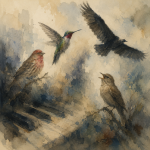

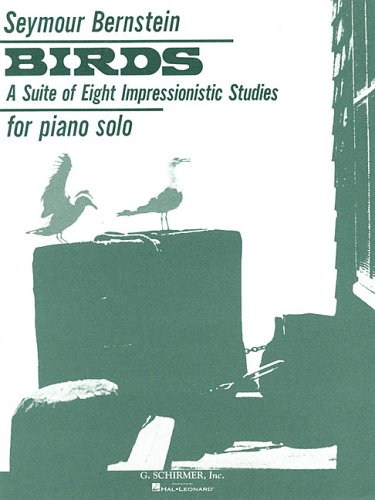
The Purple Finch (from Birds vol. 1)
Seymour Bernstein Intermediate
Printed Edition
The Hummingbird (from Birds vol. 1)
Seymour Bernstein Intermediate
Printed Edition
The Vulture (from Birds vol. 1)
Seymour Bernstein Intermediate
Printed Edition
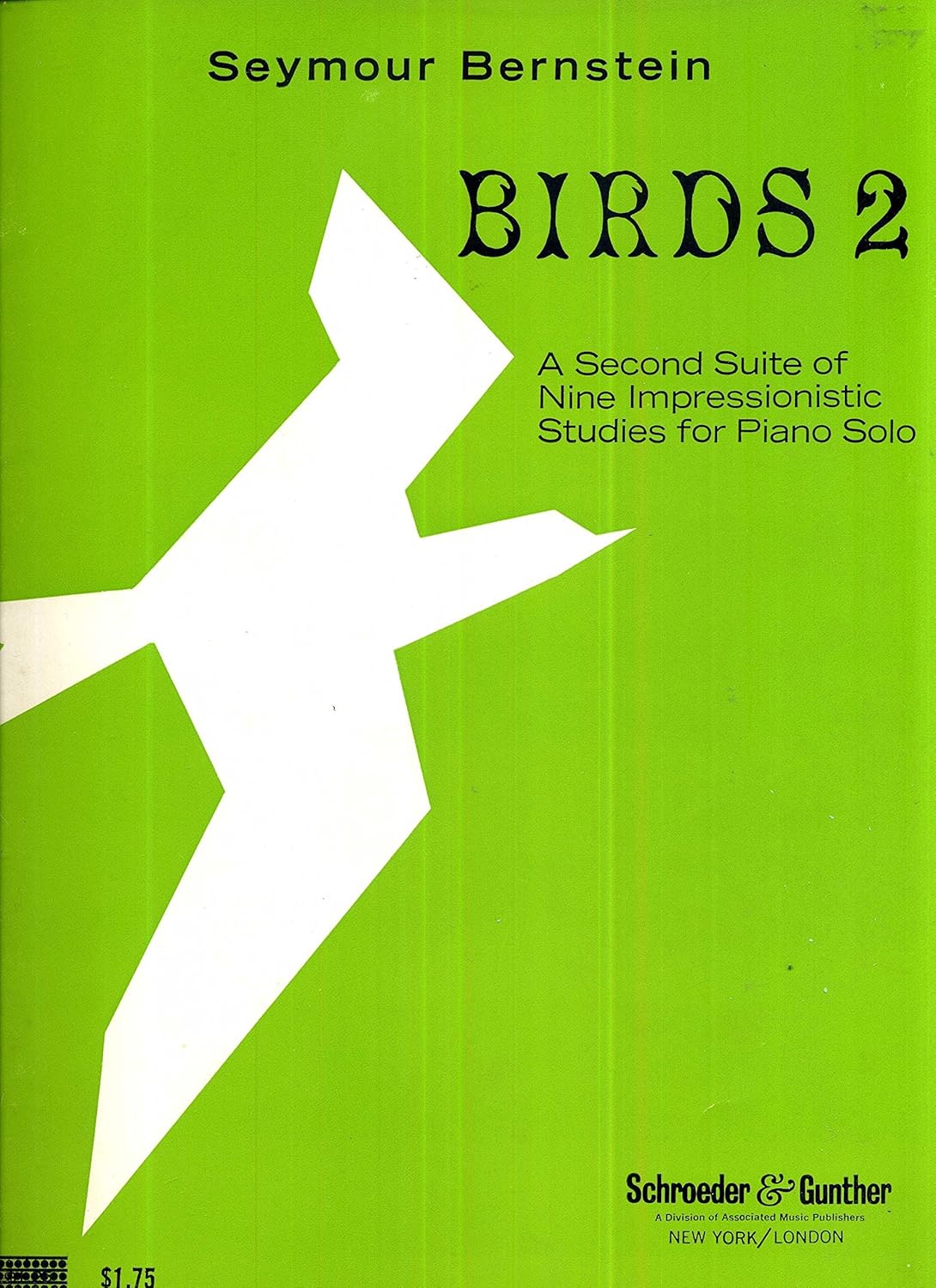
The Nightingale (from Birds vol. 2)
Seymour Bernstein Late Intermediate
Printed Edition
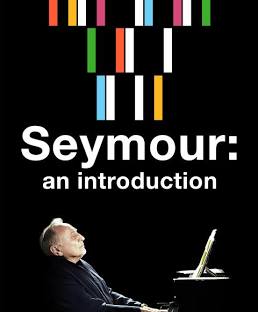
Watch the documentary now, for free!
Last week, the piano world lost the American pianist, composer, teacher, and author Seymour Bernstein at the age of 99.
In this special episode of The Piano Pedagogy Playlist, I reflect on Bernstein’s extraordinary life and legacy — not only as a concert artist, but as one of the great master teachers of American piano pedagogy.
Although Bernstein enjoyed a successful performing career, he made the remarkable decision at the age of fifty to step away from the concert stage permanently, devoting himself instead to teaching, composing, and writing. He never seemed to view teaching as something lesser than performing. In many ways, he appeared to see it as the deeper artistic calling.
I also share some thoughts on Ethan Hawke’s beautiful documentary Seymour: An Introduction, which offers a moving portrait of Bernstein’s artistic philosophy, humanity, and lifelong devotion to music.
The second half of the episode features a miniature recital of four pieces from Bernstein’s collection Birds:
• The Purple Finch
• The Hummingbird
• The Vulture
• The Nightingale
These impressionistic character pieces beautifully showcase Bernstein’s gift for writing imaginative, expressive, and pianistically satisfying music for students.
— Remembering a musician who devoted his life not only to piano playing, but to the people learning to play. —
— Transcript —
Last week, The Piano World, and specifically The Piano Teaching World, lost one of its most beloved protagonists. Seymour Bernstein passed away on April 30th, at the age of 99.
Bernstein was a concert pianist, a composer, an author, a clinician, and a teacher. And I suspect that last title is the one he valued most highly.
In classical music, we sometimes speak as though performing is the highest level a musician can attain. And though teaching is important, it’s somehow a smaller calling. It’s the whole those who can do, those who can’t teach mentality.
Seymour Bernstein didn’t believe that. He had all the markings for a major performing career. He studied with remarkable musicians.
He performed internationally. Critics admired his playing, and he connected strongly with audiences. But at the age of 50, Bernstein made an extraordinary decision.
He played a concert at the 92nd Street Y in New York City, and quietly walked off the public stage for good. No one knew it was going to be his final performance. He never announced it.
There was no dramatic farewell. He simply decided that chapter of his life was complete. Now a major reason for this was, despite all of the accolades, Bernstein suffered from severe stage fright.
It’s something he himself spoke about with unusual honesty. And I think that honesty is part of why so many musicians and teachers felt such a deep connection to him.
Feelings of inadequacy and self-doubt are pretty common among those with careers in the arts, and even among those whose performances are just for their church or community or for their own students. But it’s not often discussed out in the open.
Bernstein didn’t present artistry as confidence or glamour or career success. For Bernstein, artistry was more about sensitivity and vulnerability, truly knowing who you are and what you are about as a musician and as a person.
Rather than continuing to pursue the concert stage, he devoted himself more fully to teaching, writing, composing, and mentoring others in the purest sense of the word. Importantly, he never seemed to view that choice as defeat.
He did not see becoming a master teacher as something less than being a master performer. This past week, after learning of his passing, I finally got around to watching Ethan Hawke’s documentary called Seymour, An Introduction.
Watching Bernstein speak, I felt like I was getting a glimpse into the mind of a kind of artist that’s becoming more and more scarce.
Maybe I’m over-romanticizing the past, but in my eyes, Bernstein belonged to a generation that seemed less concerned with branding or visibility and career optimization.
More concerned with the inner artistic life, what it means to dedicate yourself to something deeply and quietly over the course of decades. There’s a profound sincerity to him that I found very moving.
And honestly, I think many of us piano teachers recognize something familiar in the life he chose. Because teaching piano is often work that happens far from the spotlight.
It happens in our studios, in our homes, in schools, in small moments repeated week after week for years.
We might not play Carnegie Hall, but we have the opportunity to shape how another human being experiences music, and maybe even their relationship with themselves. Bernstein understood the significance of that work very deeply.
Again, that documentary is called Seymour An Introduction. You can watch it free online via the service Tubi. There’s a Tubi app you can download for all the major streaming devices, tablets, and phones.
It’s completely free to create an account, although you will have to sit through some ads.
Even if you don’t consider yourself the documentary type, if you’re in need of a little inspiration, maybe a poignant reminder of why you got into this profession in the first place, I can’t recommend it highly enough.
I’ll put a link in the episode description and also on the website, pianopedagogyplaylist.com. Now it’s time for some music.
As a composer, Seymour Bernstein left behind a sizable opus of pedagogical repertoire, music written not necessarily to impress, but to genuinely serve students.
The four pieces I’ve chosen to play today all come from his acclaimed collection in two volumes titled Birds. They’re little impressionistic portraits, not literal bird song, but impressions of movement, personality, even attitude.
The first will be The Purple Finch. The piece is punctuated by quick, darting rolled chords, like the tiny alert movements birds make when they suddenly turn their heads. After that comes The Hummingbird.
It’s fast and shimmering and brilliantly pianistic in a very practical way, well suited for even intermediate level students. It will help to develop quick fingers, but there aren’t any awkward stretches or uncomfortable hand positions.
The third piece is The Vulture. Unlike the brighter birds earlier in the set, it’s something darker we have here. Circling motion, an ominous atmosphere, and a sense of inevitability.
It feels very true to the nature of this bird of prey. As numerous composers have done for centuries, Bernstein uses the Dies Irae melody, the famous Gregorian chant that evokes foreboding and death.
You will hear it repeated insistently in the right hand, while chords in the left hand also present the melody in an elongated form, creating a felt presence of darkness.
I will conclude then with The Nightingale, the only piece I have chosen from Book 2 in this set. Bernstein marks it as an old-fashioned love song.
And that somehow feels like a beautiful final sentiment for a musician who devoted his life not just to piano playing, but to everything it means to be human.
I’ll leave you today with these four pieces by Seymour Bernstein, The Purple Finch, The Hummingbird, The Vulture, and The Nightingale.
Leave a Reply