

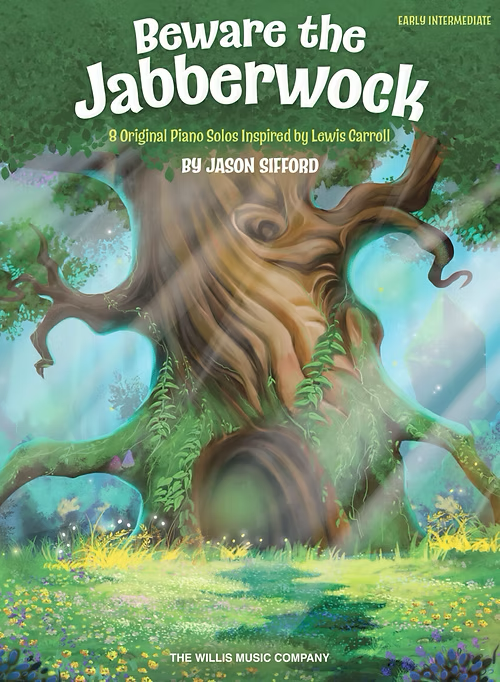
In the Wabe (from Beware the Jabberwock)
Jason Sifford Intermediate
Digital Download
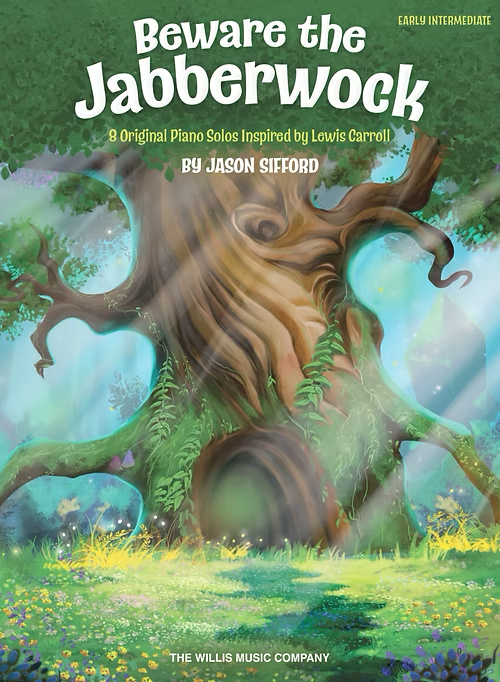
Whiffling Through the Tulgey Wood (from Beware the Jabberwock)
Jason Sifford Intermediate
Digital Download
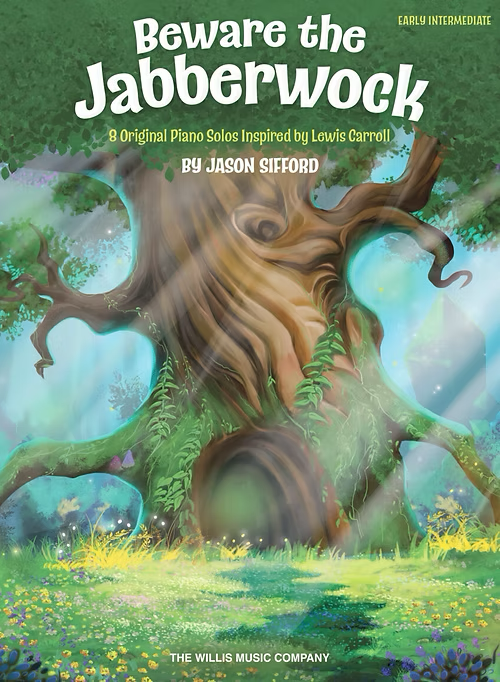
O Frabjous Day! (from Beware the Jabberwock)
Jason Sifford Intermediate
Digital Download
This week, I’m taking a little three-act adventure at the piano with music from Jason Sifford’s Beware the Jabberwock, inspired by Lewis Carroll’s poem “Jabberwocky” from Through the Looking-Glass. I begin in the serene landscape of “In the Wabe,” venture into the woods for “Whiffling Through the Tulgey Wood,” and return home for the joyful celebration of “O Frabjous Day!” Along the way, I play each piece, explore its connection to the poem, and discuss some of the musical details that make this collection rewarding to teach and play- from Alberti bass to alternating arpeggios to chromatic patterns that become easier once students spot how they work. There’s a little storytelling, a little music theory, and just enough Carroll-inspired nonsense to keep things suitably frabjous. All three pieces are current National Federation of Music Clubs Festival Selections and are available individually as digital downloads.
— Transcript —
“And as in uffish thought he stood, The Jabberwock, with eyes of flame, Came whiffling through the tulgey (TULL-jee) wood, And burbled as it came!”
“Alice’s Adventures in Wonderland” and “Through the Looking-Glass”, those famous novels by Lewis Carroll have inspired generations of artists, filmakers, and composers.
This week, I’m playing three pieces from Jason Sifford’s piano collection Beware the Jabberwock. It’s inspired by “Jabberwocky”- the wonderfully weird poem Alice discovers in Through the Looking-Glass, and from which came the opening stanza that I just read.
We’ll have a little three-act mini-drama with a glimpse of a strange and curious landscape, then the arrival of the fearsome Jabberwock, and finishing with a joyful celebration of the hero’s return. It’s a fantasy-adventure soundtrack inspired by 19th-century literature, and perfectly suited for intermediate-level piano students.
Coming up next on the Piano Pedagogy Playlist.
Greetings and welcome. I hope your day is going well. My name is Luke Bartolomeo. I’m a pianist, a teacher, and also a developer of music education apps, including Flash Note Derby.
Each Monday on this podcast, I play through some of my current favorites from the piano teacher’s repertoire, all written by living composers.
The collection in focus today is called Beware the Jabberwock. It consists of eight intermediate-level pieces, three of which I’ll play for you today. Composer Jason Siffer draws on the characters, places, and adventures of a short poem titled Jabberwocky, which comes from the much larger novel Through the Lookingglass.
Our first stop is a lovely piece that sets the scene for the adventure ahead. It’s called In the Wabe.
The Wabe? What’s the Wabe? Well, if you embark on reading any of the Alice in Wonderland series of books, you have to be prepared to encounter many words that don’t actually exist. Oftentimes, it’s kind of difficult to discern which are the made-up words, and which ones are actually real words.
Wabe is one of the made-up ones that we come to learn means a spacious and peculiar grassy landscape, presumably where the ensuing battle with the fearsome Jabberwock takes place.
As for the music, Alberti bass patterns are prominent in the left hand, a warmly expressive melody in the right, some nice parallel sixths, and a slightly slower middle section that allows us to pause for a moment and survey our surroundings.
Enter in with me to this fantastical world. This is In the Waib.
From the relatively serene landscape of the Waib, we are startled by the approach of the dreadful Jabberwock, who comes whiffling through the tulgy wood with eyes aflame. Whiffling through the tulgy wood.
In this case, we have a real word, whiffling. It implies that the creature arrives accompanied by a lot of huffing and puffing and other noises. Tulgy, however, is another made-up word by Lewis to describe the surrounding woods as thick and dense.
This is a quick piece in 6-8 time, with the left hand providing the engine that drives the momentum along. There’s a fun alternating arpeggio section that uses familiar triads and various inversions. It’s just begging for a theory lesson side quest.
It also features a really fun sequence of chromatically rising broken fifths. Once the student realizes it’s actually just a pattern of ascending half-steps, it goes from being a stumbling block to one of the easiest sections to learn.
The piece ends rather calmly, as if hero and adversary are completely still for a moment, locking eyes, sizing each other up, and preparing for battle.
Here is Whiffling Through the Tulgy Wood.
The Jabberwock has now made its entrance. And in the poem, a brief and decisive battle follows. The boy dispatches the monster with his sword and returns home victorious.
Two equally evocative musical movements depict the sword stroke that kills the Jabberwock, and then our hero’s exuberant journey home, carrying the monster’s head in tow. I’m skipping over that part of the story and going directly to the boy’s homecoming.
The piece is called Oh Frabjous Day. Frabjous being another invented word, likely some kind of mashup of joyous and fabulous, I guess.
The music features a majestic introduction, like the start of an awards ceremony, and then breaks out into a lively jig that easily brings to mind a lot of dancing and eating and merrymaking of all kinds.
The left hand gets the drone base of the bagpipes, while the right hand gets most of the fun stuff, including a descending two and a half octave G major scale that takes us home to the final triumphant chord.
Lots of fun to play, and completely manageable for an intermediate level student. This is Oh Frabjous Day.
On our journey today, we’ve wandered through the waib, heard the Jabberwock come a-whifflin, and made it back home in one piece. Thanks to Lewis Carroll for the timeless story, and especially to Jason Sifford for putting a little of that magic and silliness under our fingers.
Each of the three movements I played today from the collection Beware the Jabberwock are available individually for immediate purchase via digital download. Links are in the episode description, and also on our website. It’s pianopedagogyplaylist.com. All three of today’s pieces are current National Federation of Music Club’s festival selections.
And just like that, we have to close the lid on this episode of the Piano Pedagogy Playlist.
As you head into another week of teaching, I’d like you to keep this in mind. You don’t have to galumph every day. Sometimes even the mimsiest Borogov is enough. Trust the quiet gimbling of your own waib.
I’ll be back again next Monday with some more of what’s good in the contemporary piano teacher’s repertoire. Until then, keep nurturing the music, and have a frabjous week.

Leave a Reply