

November- Catherine Wheel (from A Year in Twelve Keys)
Chris Caine Advanced
Digital Download
Firestorm
Christopher Goldston Intermediate
Digital Download
Who, or what, is a Catherine Wheel? Chris Caine’s “November” pays tribute to one of the most dramatic fireworks around- and channels Debussy’s “Feux d’artifice” into a piece that captures the same explosive spirit at a more accessible level. We explore the history behind the firework, the British tradition of Guy Fawkes Night, and the particular challenges that make this Trinity Grade 8/RCM level 10 piece rewarding for advanced students. Paired with Christopher Goldston’s “Firestorm”- completed from a three-measure sketch left by his mother, Margaret Goldston- this episode offers two pieces at contrasting levels united by forward momentum and firelit energy.
— Transcript —
Catherine Wheel? Catherine Wheel? Who on earth is Catherine Wheel?
When I read the subtitle to Chris Caine’s piece from A Year in 12 Keys, dedicated to the month of November, and I saw "Catherine Wheel," I thought, maybe it was just a dedication to someone I’d never heard of? Now, some of you are laughing at me right now, but for the rest of us, I’ll fill you in on what I learned with a little internet research.
There was an indie rock band in the 90s called Catherine Wheel. There was also a rather unpleasant medieval torture device called the Catherine Wheel, named after Saint Catherine of Alexandria. Neither of those seemed to be likely inspiration for a piano piece. But then I found the spinning firework called the Catherine Wheel, and things started to make sense.
There’s a connection to Debussy and a British holiday coming up on November 5th. And by the end of this episode, you’ll understand how they all relate together. We’ve got a little fire and a little spin and a little history, coming up next on the Piano Pedagogy Playlist.
Greetings and welcome. I hope your day is going well. My name’s Luke Bartolomeo. I’m a pianist, a teacher, and also a developer of music education apps for children, including Rhythm Swing. Each Monday on this podcast, I play through some of my current favorites from the piano teacher’s repertoire, written by living composers.
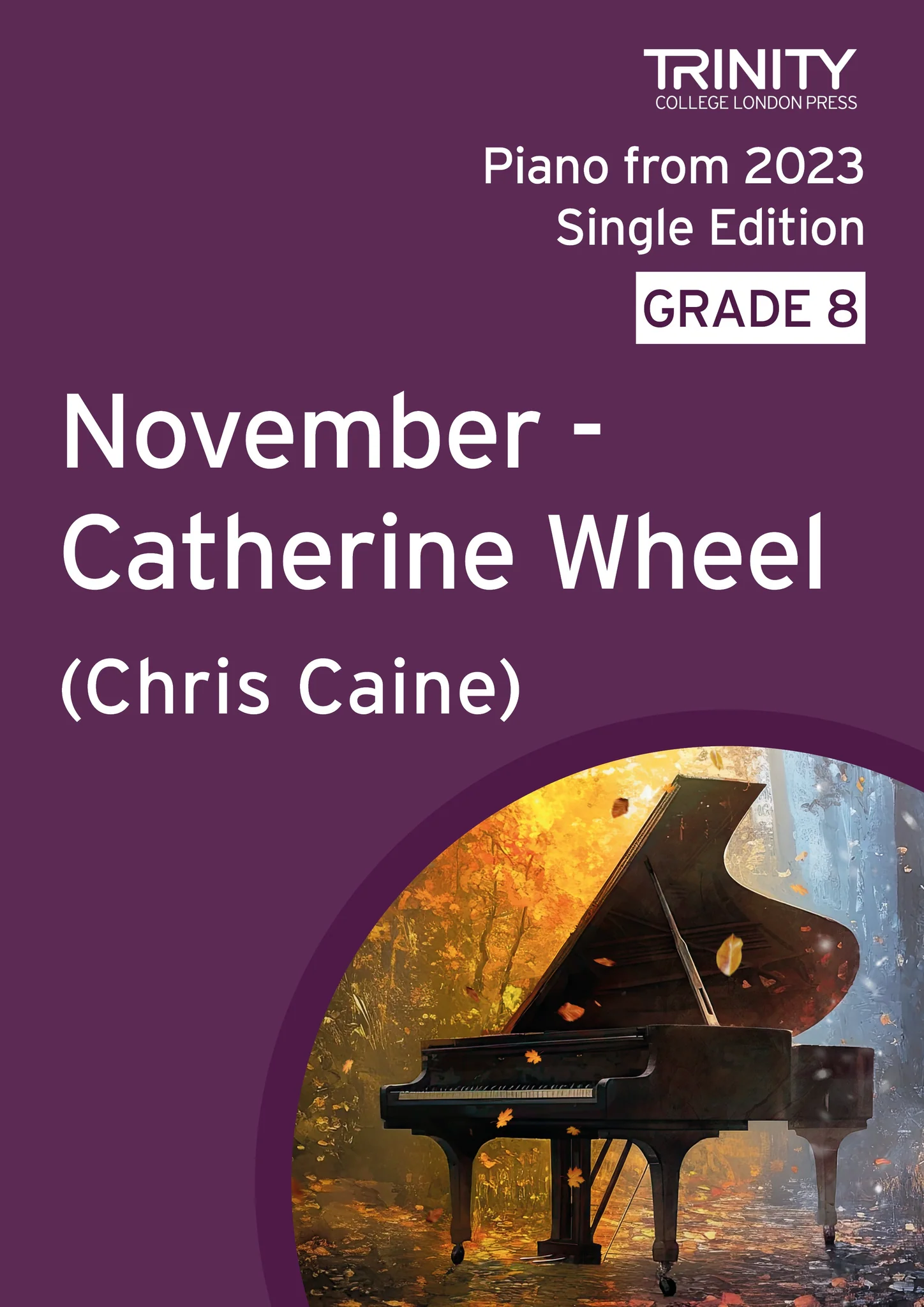
Our first piece today is November – Catherine Wheel from Chris Caine’s collection, A Year in 12 Keys. I’ve been playing one piece from the collection on the first Monday of each month this year, and I have to say, when I first saw this title, I wasn’t entirely sure what to make of it.
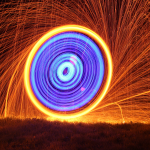
While British piano teachers would almost certainly recognize a piece with the subtitle "Catherine Wheel" as being inspired by fireworks, I’ll be honest — I had to learn it from the composer’s notes. A Catherine Wheel is a particular type of firework that spins around as it burns, throwing out sparks in a circle. And the real inspiration for this composition came from Debussy’s "Feux d’artifice," an impressionistic depiction of fireworks that could be argued is Debussy’s most overtly flashy composition.
But why in November? Well, it turns out that on November 5th, the Brits celebrate Guy Fawkes Day, also known as Bonfire Night. It’s an annual tradition dating back to 1605, when a man named Guy Fawkes was caught guarding explosives beneath the House of Lords. Conspirators were trying to blow up King James I and Parliament. In short, the plot failed, the king survived, and people around London started lighting bonfires to celebrate. Within a few decades, it became an official annual day of Thanksgiving, and eventually fireworks became closely associated with the celebration.
Like the Debussy, in Chris’s piece, you will hear the piano creating flashes of color and bursts of energy. There’s a sense of watching something unpredictable unfold, but in a very orderly way.
It’s a tough piece. Grade 8 in the Trinity College exams? That pretty much corresponds with RCM grade 10, so we’re talking top tier here. For me, a particularly fiddly section involves polyrhythms of 3 against 8. At a certain point, I think you just have to simultaneously hear both of those rhythms and let each hand do its thing. Whenever I tried to calculate the exact placement of notes while playing, my wheel came to a grinding halt.
As you listen to the beginning of this piece, I want you to imagine the fuse is being lit. It sputters a couple of times, and then it catches. The wheel begins to spin, putting on an ever-changing display, until it erupts into a breathless finale and abruptly burns itself out.
From A Year in 12 Keys, here is the November installment — Catherine Wheel by Chris Caine.
That is a really solid contemporary piece for an advanced student. Someone who enjoys music that creates a vivid picture and follows a brilliant musical arc. And while it’s certainly not easy, it’s considerably more approachable than Debussy’s "Feux d’artifice." Maybe a stepping stone on the way there.
I’d like to feature one more piece today. Something in a similar spirit, but achievable by students at an earlier level. That piece is by another Chris — Christopher Goldston — and it’s called Firestorm.
It’s not about fireworks, per se, but it carries that same feeling of perpetual motion. It’s built on triad inversions in the key of E minor that fit comfortably under the hands. The texture is clean and direct, with the opportunity for the left hand to punctuate the important melody notes. It’s a great piece for students who want to explore that same kind of dramatic, fast-moving, contemporary repertoire without needing quite the same level of technical chops. We’re more at an RCM level 6 or 7 here, I would say.
This piece was another one of several that has its origins in a sketch that Chris’s mother, Margaret Goldston, had left unfinished. It was intended to be part of a collection called The Lyrical Performer, a sequel to her popular collection, The Virtuosic Performer. It was untitled and consisted of only three measures of music. From that small spark, Chris created this blazing result.
Here is Firestorm.
Today we heard two pieces with a lot of energy and forward motion: Chris Caine’s spinning, sparkling November – Catherine Wheel, and Christopher Goldston’s more intermediate-level appropriate, but no less exhilarating piece, Firestorm.
We’re almost at the end of our journey through A Year in 12 Keys. There’s just one piece left, and you’ll hear it on the first Monday in December, right here on this podcast. If you’ve missed any of the earlier installments, you can get caught up by visiting our website, pianopedagogyplaylist.com. You’ll also find the links to purchasing today’s music selections as instant digital downloads.
And just like that, we have to close the lid on this episode of the Piano Pedagogy Playlist.
I keep returning in my mind to those opening notes of Catherine Wheel — those little sputtering hesitations that precede the whole thing lighting up. So many of our experiences are like that: starting an ambitious new piece to work on, for instance; or getting a new beginning student interested and motivated; or even personal projects we might have going on outside of our musical lives.
Sometimes it takes a little effort and a little patience to get that first spark to catch. But when it does, how quickly it can set everything into motion.
I’ll be back next Monday with some more of what’s good in the contemporary piano teacher’s repertoire. Until then, keep nurturing the music. And have a great week.
Leave a Reply