

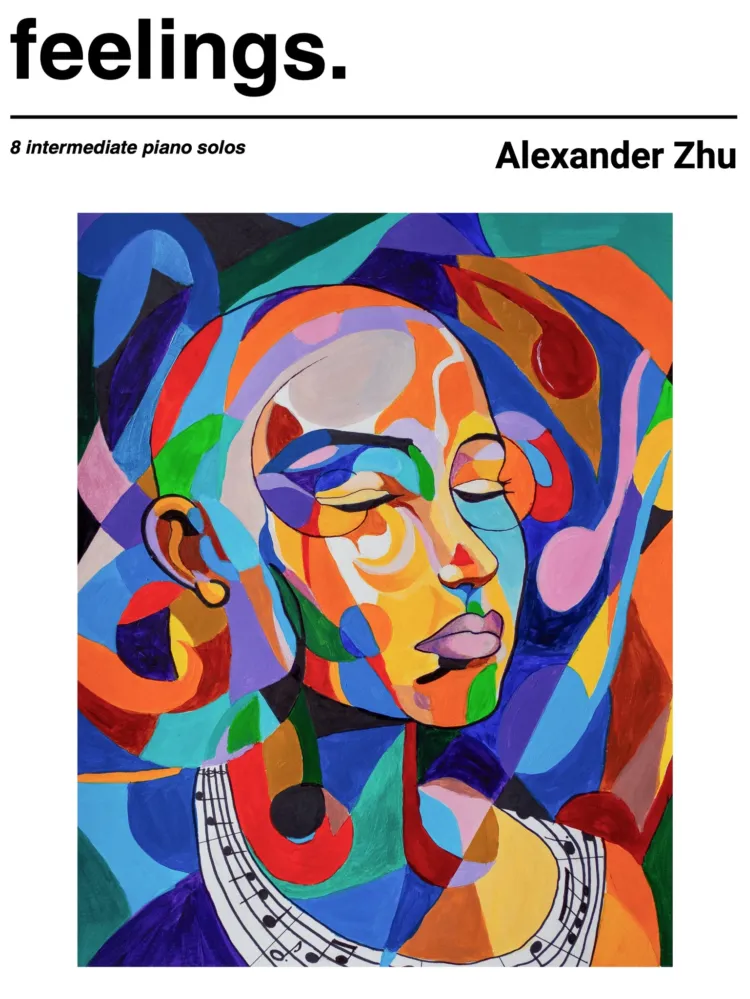
happiness (from feelings)
Alexander Zhu Late Elementary
Digital Download
Printed Edition
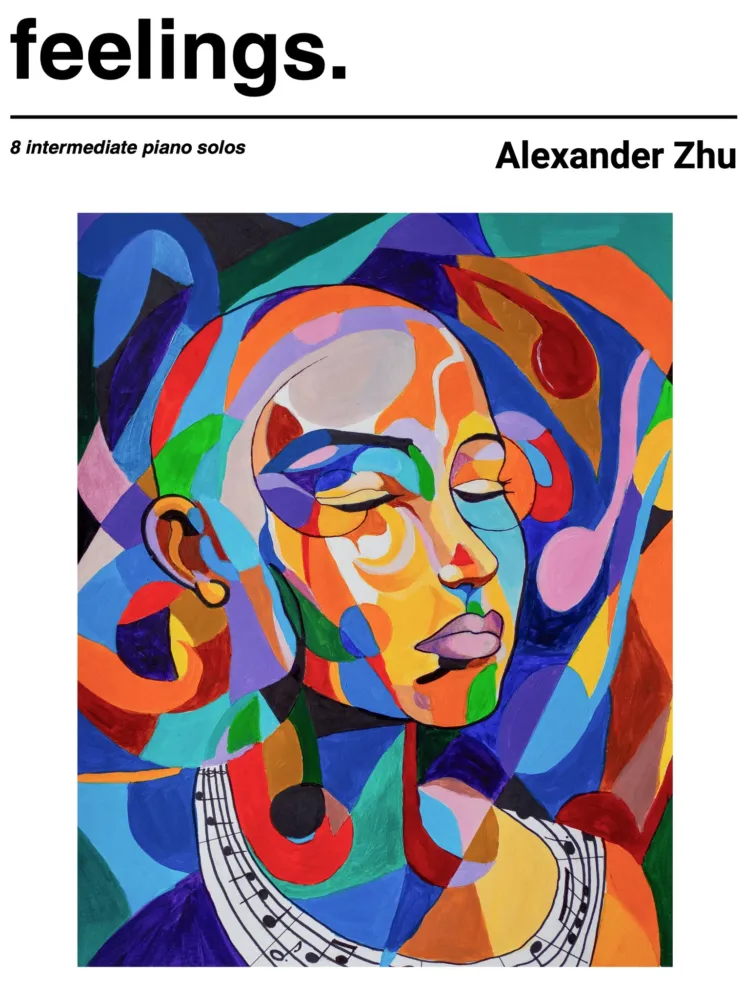
melancholy (from feelings)
Alexander Zhu Late Elementary
Digital Download
Printed Edition
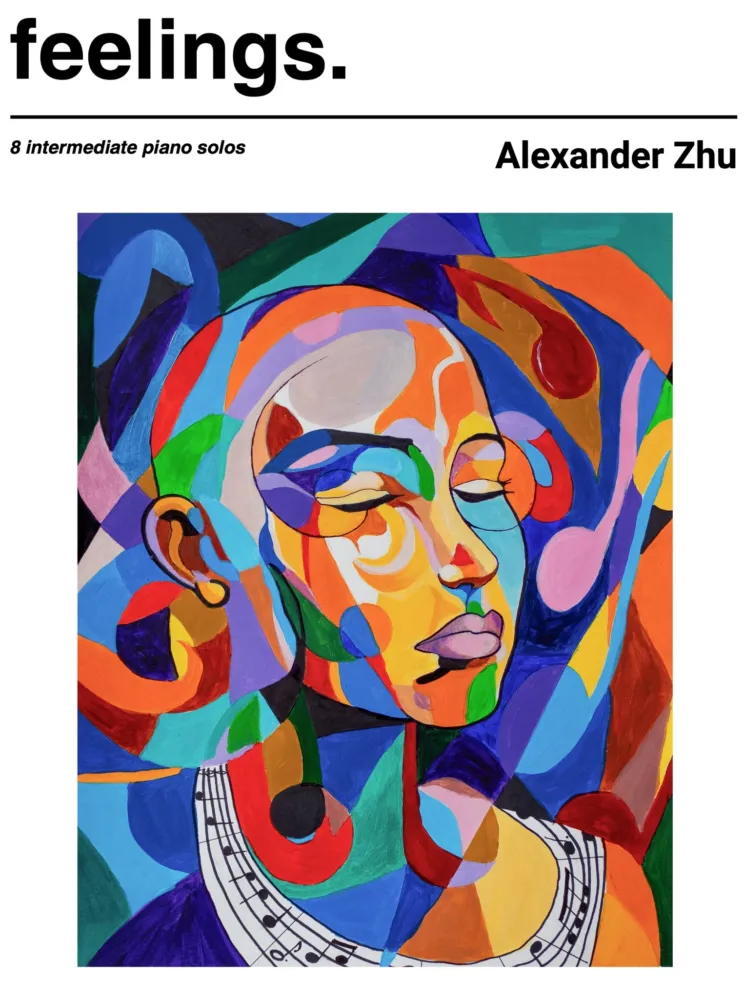
crying (from feelings)
Alexander Zhu Late Elementary
Digital Download
Printed Edition
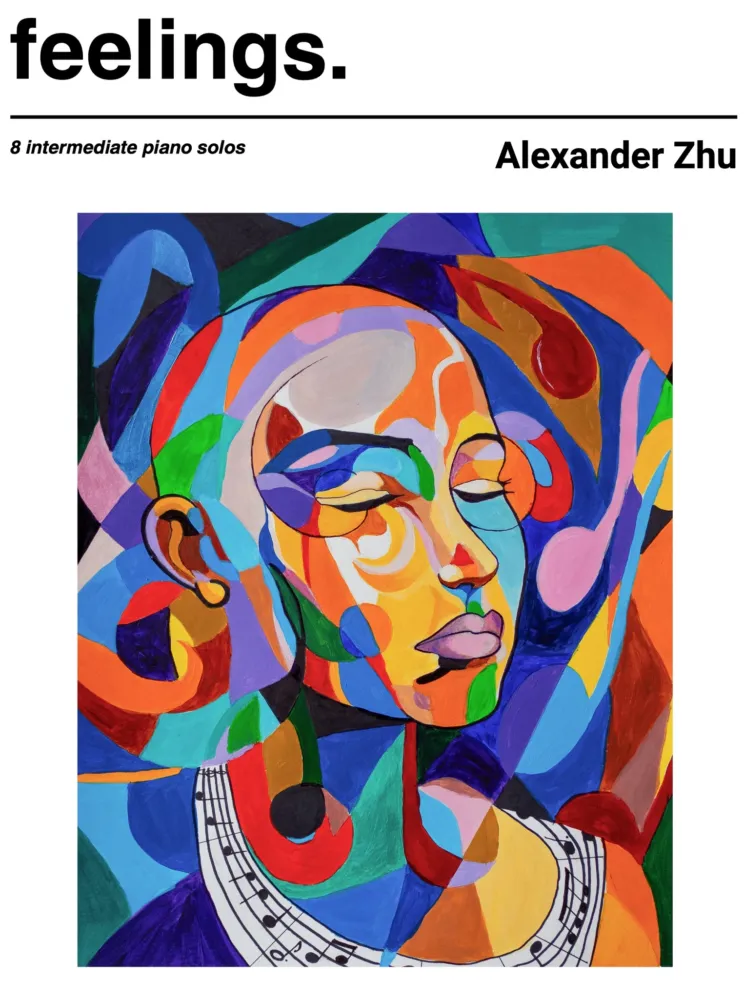
excited (nervous) (from feelings)
Alexander Zhu Late Elementary
Digital Download
Printed Edition
This week is all about the feels. I’m exploring “feelings,” a just-released this year piano collection by Alexander Zhu.
I play four pieces from the collection- happiness, melancholy, crying, and excited (nervous)- and talk about why this repertoire matters so much for older beginners. They yearn for music that sounds sophisticated and mature, even though their playing at an elementary level.
We also explore Zhu’s “postminimalist” style, his use of aleatoric elements to foster creative agency in students, and a new word I learned while preparing this episode, “anemoia”: the feeling of nostalgia for a time or place you’ve never actually experienced.
— Transcript —
Think for a moment about the elementary piano music used in your studio. There’s probably quite a wide variety, but there’s a good chance a lot of it is full of things that are designed to appeal to six or seven-year-olds. Animals, silly lyrics, illustrations on every page — and that’s perfect for kids that age.
But what about a 12 or 13-year-old beginning student? Or an older transfer student that needs to go back and rebuild a good foundation? They’re motivated and curious, but when you open the book, they won’t always say it out loud — but you can see it on their face: Do I really have to play this?
Today on the podcast, I’ve got four short pieces by Alexander Zhu — that’s Z-H-U. They’re from his collection called Feelings, a book written specifically to bridge this awkward middle ground. The pieces are atmospheric and cinematic and a little bit moody, kind of like the students who will be attracted to them. They’re coming up next on the Piano Pedagogy Playlist.
Greetings and welcome. I hope your day is going well. My name’s Luke Bartolomeo. I’m a pianist, a teacher, and also a developer of music education apps for children, including Rhythm Swing.
Each Monday on this podcast, I play through some of my current favorites from the piano teacher’s repertoire, written by living composers.
Today’s collection is called Feelings by composer, pianist, and teacher Alexander Zhu. He is based in Los Angeles, where he’s the chair of the music department at the Pasadena Conservatory of Music. He’s also a performing pianist and writes music for film and other media that have appeared on Netflix and Disney+. So as you listen today, you might hear some of those different musical worlds finding their way into his writing for students.
Feelings is the first of three collections in a series. It begins around the late elementary level and moves towards early intermediate territory. The composer describes his musical style as post-minimalist. You might hear things today that remind you of the music of Philip Glass or John Adams, maybe even Brian Eno. Lots of pattern repetition and harmonies that just slowly evolve rather than follow the clear-cut path of functional harmony.
They don’t require so much technically, and the abundant patterns make the reading a little bit less of a chore. And I think that’s really appealing to an older beginner that needs to be hooked — they need a mature, sophisticated sound, even as they are working through rather elementary repertoire.
Let’s jump right into our first piece — our first feeling, so to speak. This one is “happiness.”
[PERFORMANCE BLOCK 1]
Nothing childish at all about that piece. Students will love the cross-hand playing at the beginning, and of course, the accelerando finish — which the composer says can be spun out for as long as you wish.
The next piece also embraces repeated patterns, but to a much different effect. “Melancholy” is our next feeling. And playing it requires a mature patience. I’ve heard this style of music described as “music where nothing happens.”
That’s pretty accurate. It’s music that just is. And the second half of “melancholy” just seems to wander around, not sure in which direction to go. And that feeling of ambiguity extends to the very last measure, where the composer gives us a box of eight pitches and instructs us that we can freely play them in any order we wish. The student gets to create their own miniature rainy-day cadenza.
Here is “Melancholy” by Alexander Zhu.
[PERFORMANCE BLOCK 2]
From “happiness” to “melancholy,” we’re going to continue our downward spiral with a piece called “Crying.” It’s actually more like quiet weeping. And it’s conveyed with gentle tone clusters.
It almost sounds like the accompaniment to a sad melody — without the sad melody. It’s just atmosphere and mood.
But we quickly get out of our funk with our final emotion. The last piece today is called “Excited,” with the word “(nervous)” in parentheses. I like how the title presents those two feelings — excited and nervous — as two sides of the same coin. It’s very much like how we feel before a performance. That nervousness can be helpfully reframed as a kind of excitement.
These two sides are depicted musically in the piece with contrasting articulations. And you get to choose: start out with either legato or staccato touch, and then alternate for the second half of the piece. It’s definitely one of the most fun pieces in the book.
Our final two selections — “Crying” followed by “Excited (nervous)” — by Alexander Zhu.
[PERFORMANCE BLOCK 3]
I should reveal that I played that last piece at about twice the listed metronome speed. But I justify that with the fact that a performance at a very similar speed is posted on the composer’s own YouTube channel. So I have to assume the marking was either a typo, or the composer is quite accepting of various interpretations.
Today we heard four selections from Alexander Zhu’s collection Feelings, part of a three-part series that includes the volumes Instincts at the intermediate level, and Moods for more advanced students.
But it’s this volume, Feelings, that I think so effectively gives the older beginning student some repertoire that they will be proud to play.
As always, a link to purchasing the music you heard today is in the episode description and on the website — pianopedagogyplaylist.com.
And just like that, we have to close the lid on this episode of the Piano Pedagogy Playlist.
I learned a new word this week while preparing this episode: anemoia. It’s a feeling of nostalgia for a time or a place that you’ve never actually experienced.
Alexander Zhu says his music searches for anemoia. And that made me think about some of my middle school-age students and the way they’re drawn to music that feels moody or cinematic. Like they enjoy music that seems to hold a feeling they can’t quite put into words yet.
They may not have the life experience to explain everything they hear in music, but they know there’s something there. And maybe playing these feelings gives them a way to explore them before they’re truly ready to experience them.
I’ll be back next Monday with some more of what’s good in the contemporary piano teacher’s repertoire. Until then, keep nurturing the music and have a great week.
Leave a Reply