


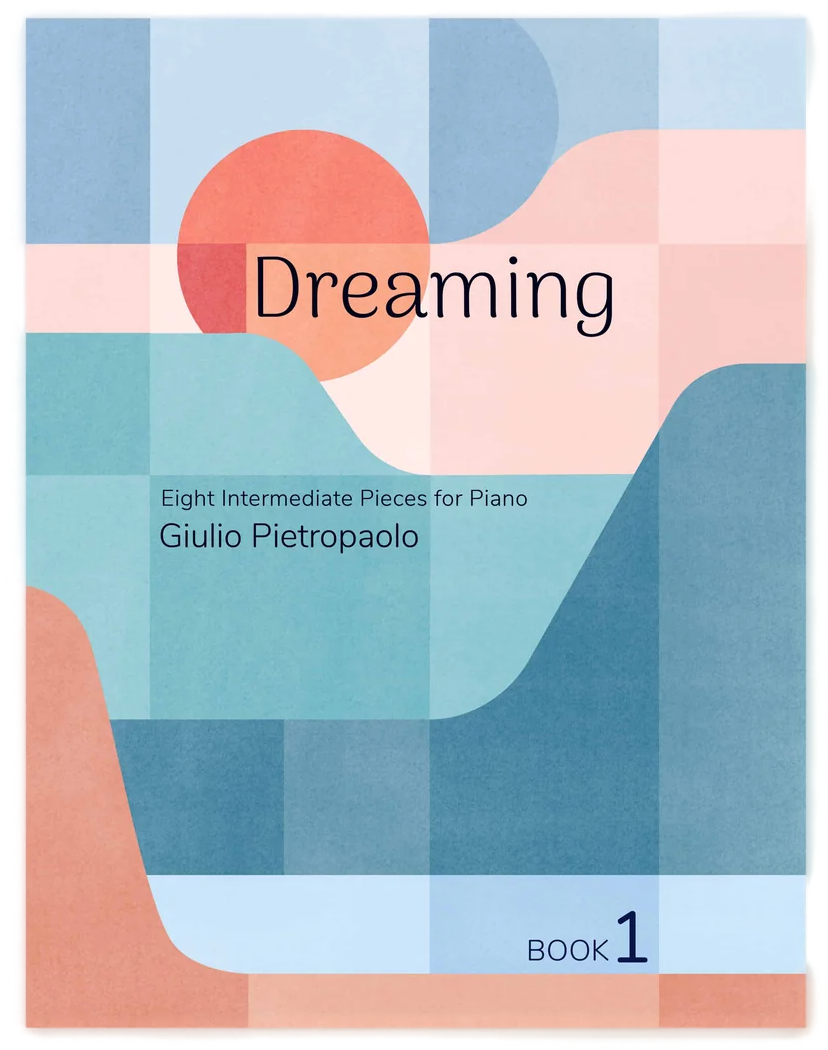
Up and Down (from Dreaming, book 1)
Giulio PIetropaolo Early Intermediate
Digital Download
Printed Edition
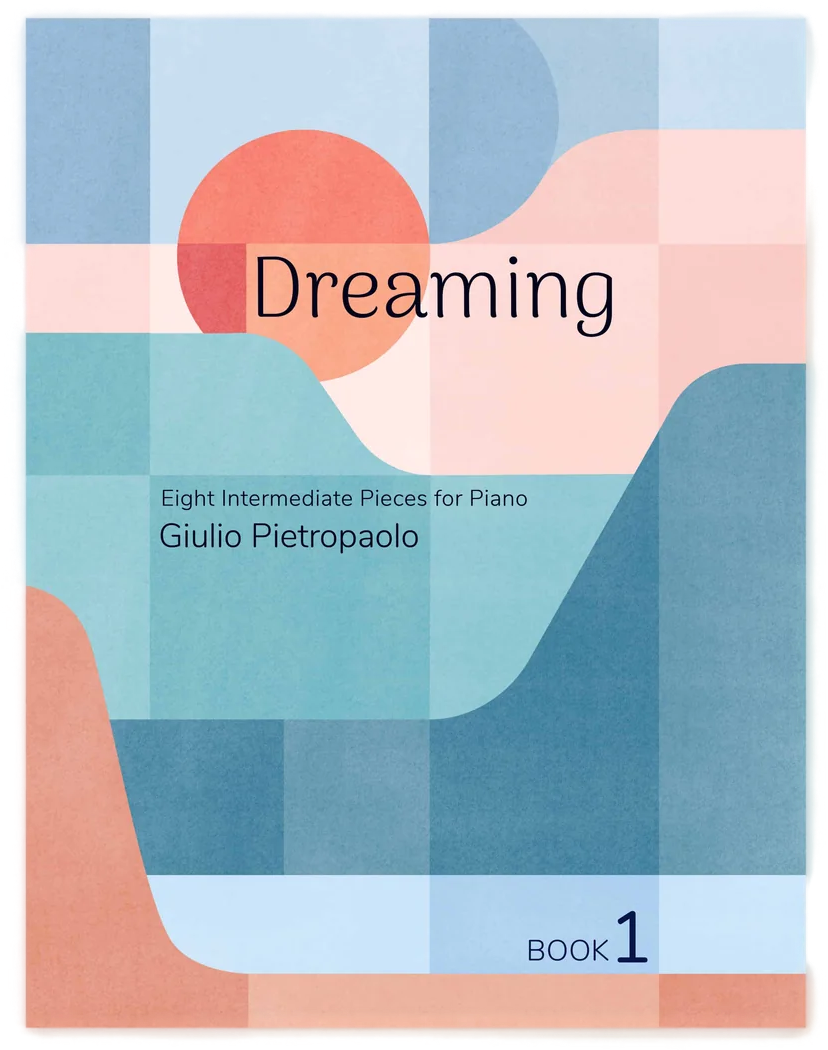
Lost (from Dreaming, book 1)
Giulio PIetropaolo Intermediate
Digital Download
Printed Edition
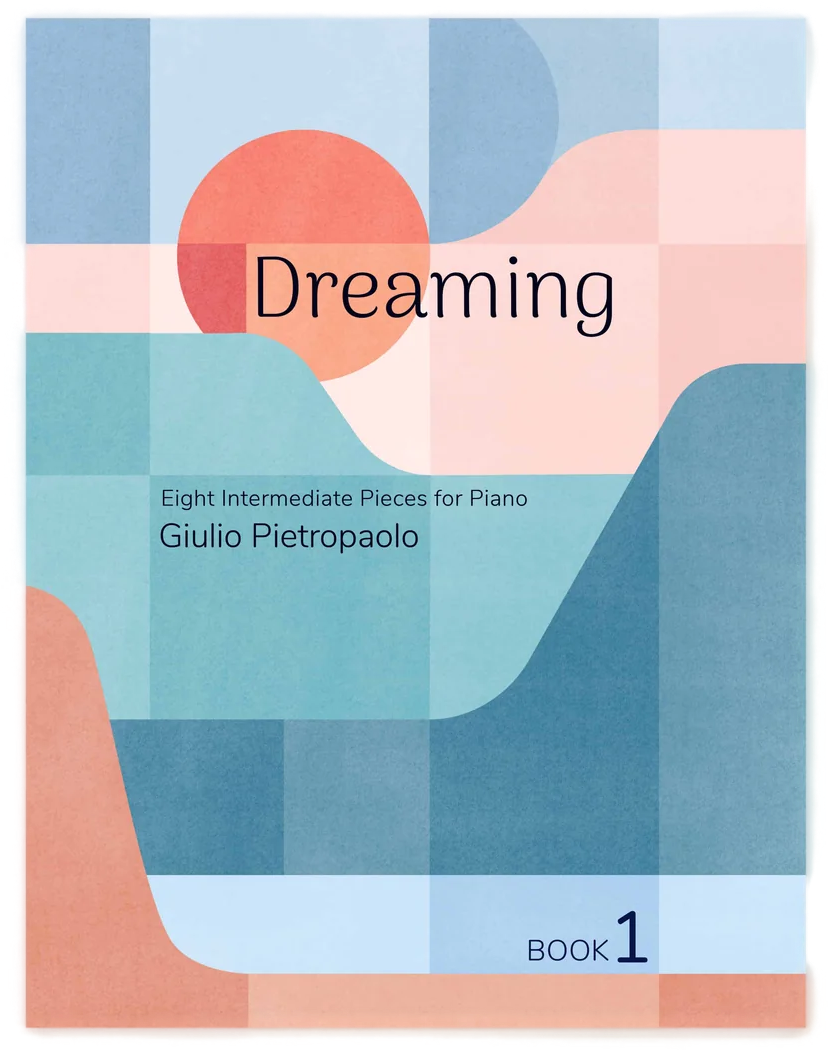
Quiet (from Dreaming, book 1)
Giulio PIetropaolo Intermediate
Digital Download
Printed Edition
This week, I return to the music of Italian composer Giulio Pietropaolo with three selections from his collection “Dreaming”: “Up and Down”, “Lost”, and “Quiet”. Each piece begins with self-imposed constraints- a familiar chord progression, a repeating ostinato, or two quietly alternating chords. But they find their own kind of freedom within those boundaries. Together, these pieces remind us that musical constraints don’t have to restrict the imagination. Sometimes, they give it exactly the place it needs to begin.
— Transcript —
A composer can do a lot with a small, simple idea. A familiar chord progression, a repeating rhythmic pattern, two harmonies simply alternating back and forth. In the hands of Italian composer Giulio Pietro Paolo, these aren’t limitations. They’re jumping off places where the music can begin exploring.
Today we’ll hear three of his pieces from a collection entitled Dreaming. Each piece finds its own kind of freedom inside of self-imposed constraints. So what’s possible when you have to play by the rules? We’ll find out next on the Piano Pedagogy Playlist.
Greetings and welcome. I hope your day is going well. My name is Luke Bartolomeo. I’m a pianist, a teacher, and also a developer of music education apps for children. Including Flashnote Derby. Each Monday on this podcast, I play through some of my current favorites from the Piano Teacher’s repertoire, written by living composers.
Today we’ve got music by Italian composer Giulio Pietro Paolo. And this is not his first appearance on the podcast. Last year, I featured four selections from his book, Melodic Explorations. Now those were duets for beginners, but they had very advanced teacher parts that really elevated the simple student material into something special.
Today’s pieces are solos at the intermediate level. And each one begins with an economical music idea that allows the composer to demonstrate his chops as he develops it into something much more.
I’m going to start with a piece called Up and Down. You could say it is the most obviously pop-influenced piece of the three. Its chord progression will certainly be familiar. Largely, it’s 1, 3, 4, 5. Sometimes 1, 3, 2, 5. But he works in two of my favorite pop devices that always make me smile, even if they are a bit cliche.
The first is the almighty secondary dominant. Now I explain secondary dominance to my students like this. We take a chord that would normally be minor in the key that we’re in, and we borrow an accidental to raise the third and make it major, and then we use that chord to make the next chord temporarily sound like the tonic.
The other little trick that I never get tired of is the borrowed minor subdominant. I have no idea if that is the official name. Sure sounds important, though. It’s simply following a normal subdominant chord in a major key with the minor version of that same chord. There’s something very Beatles-ish about it.
Cliche or not, both of these devices, I think, give this piece a little extra charm and personality. See what you think. This is Up and Down by Giulio Pietropaolo.
Now if I’m teaching that piece, that student is getting a theory lesson out of it as well. The right hand is all broken triads and various inversions, and they’re going to identify all of them.
Being able to quickly recognize chords, not just in root position but inversions too, is such a helpful tool as we work on sight-reading skills, and also as we start memorizing more complex music. I just think it’s never too early to start finding and naming chord patterns in our music whenever they appear.
So in Up and Down, we had repeated harmonic progressions. In our next two pieces, the repetition is even simpler with the use of ostinato patterns. In this first ostinato example, entitled Lost, the left hand slowly plays a broken fifth, or a broken major seventh, over and over, while the right hand seems to be actively searching for something or somewhere. An ostinato provides us with a dependable musical idea, but in this case it doesn’t necessarily mean we can dependably predict where the piece is headed. Here is Lost.
Our final piece, in a similar way, places a wandering right hand over a repeating left hand foundation. This time, though, the wandering doesn’t feel quite as urgent.
The name of this piece is Quiet, and Pietro Paolo marks it as a pastoral. As a genre, I have to say, I’m a fan of the pastoral. It’s not so much a rigid musical form as it is a vibe. That vibe is usually pretty chill. Or at least carefree. At one point, I think it might have had something to do with rural landscapes and sheep as well, but I’m sticking to what I can relate to the best. Chill and content.
Traditionally, pastoralists have had a gently rocking compound meter, such as 6-8 or 12-8. They often have a drone bass and simple repeating harmonies. In this example, we have two chords which gently imply tonic dominant. Tonic dominant. Although since the drone bass stays on the tonic note, it softens that strong progression a bit.
Interestingly, the composer chose to write this piece in 3-4. The left hand splits the measure evenly in two, playing a dotted quarter note on the first beat, and then an eighth note tied to a quarter note, something that looks like syncopation. But it’s really what we might typically have in 6-8 time. And the right hand is written with three pairs of eighth notes, instead of two groups of three eighth notes, like we would have in 6-8 time.
I have to think the composer had a motive for choosing 3-4 over 6-8, and I tried so hard to feel it in triple meter as I played it. Going so far as setting my metronome to make sure I was hearing the three pairs of eighth notes, with the syncopation in the left hand. But as soon as I turned the metronome off, I went right back to feeling 1-2-3-4-5-6. 1-2-3-4-5-6.
So I can’t say that I completely figured out what the composer intended with this one, but I still really like the piece. I invite you to take some deep breaths, and chill out with me for the next two minutes, as we enjoy Giulio Pietropaolo’s composition, Quiet.
That piece, and pastorals in general, are great seeds for improvisation. You could probably hear how the right hand had some thematic material, but a lot of the piece just sounded like it was riffing on those ideas. And there’s no reason why a student couldn’t experiment with some improvised wandering of their own over those same repeated chords.
The three pieces I played for you today were all from a volume of eight intermediate-level compositions entitled Dreaming. These are from book one of the two-book series. As always, you can find links to purchasing today’s pieces in the episode description, and also on our website, that’s pianopedagogyplaylist.com.
And just like that, we have to close the lid on this episode of the Piano Pedagogy Playlist. In the composer’s notes to this book, Pietro Paolo writes to us, “Thanks to all who read, teach, and dream with these pages. You give life to every note and every silence, transforming dreaming into an echo shared between the composer, the player, and the listener.”
I think we’re pretty lucky to be able to help our students carry that echo from the page to the piano and from the piano out to the world.
I’ll be back again next Monday with some more of what’s good in the contemporary piano teacher’s repertoire. Until then, keep nurturing the music and have a great week.

Leave a Reply