


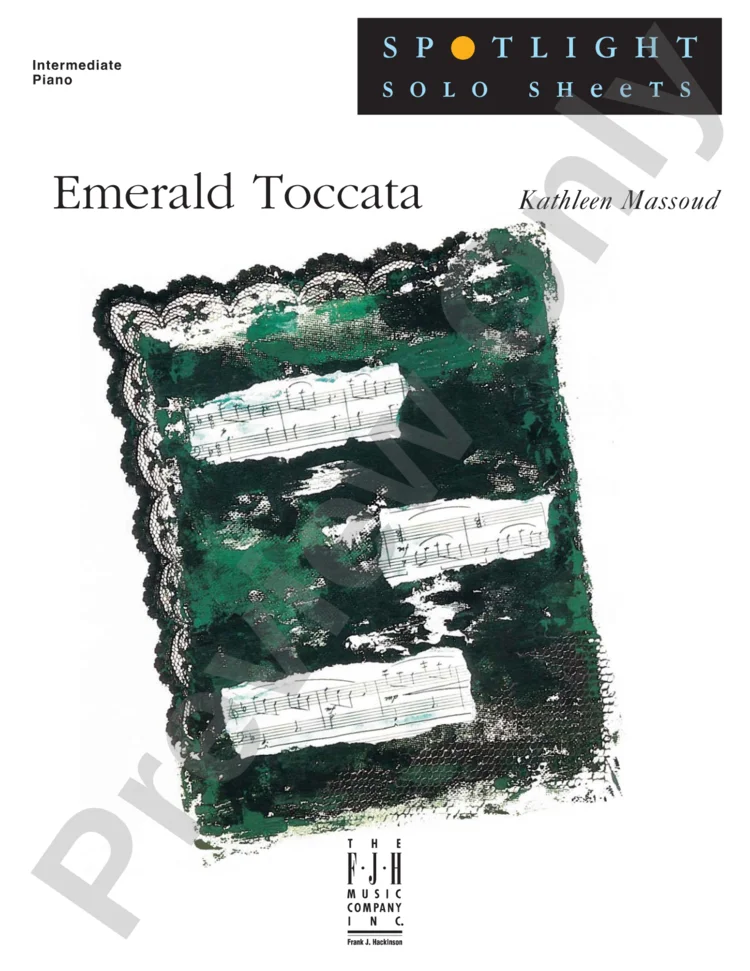
Emerald Toccata
Kathleen Massoud Early Intermediate
Digital Download
Printed Edition
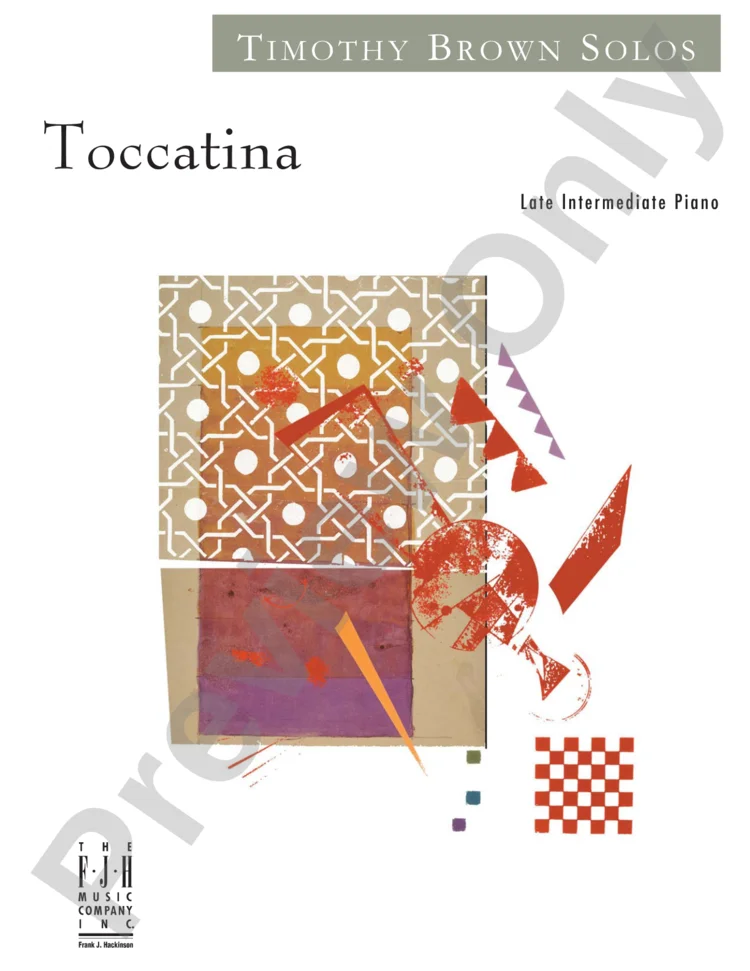
Toccatina
Timothy Brown Late Intermediate
Digital Download
Printed Edition
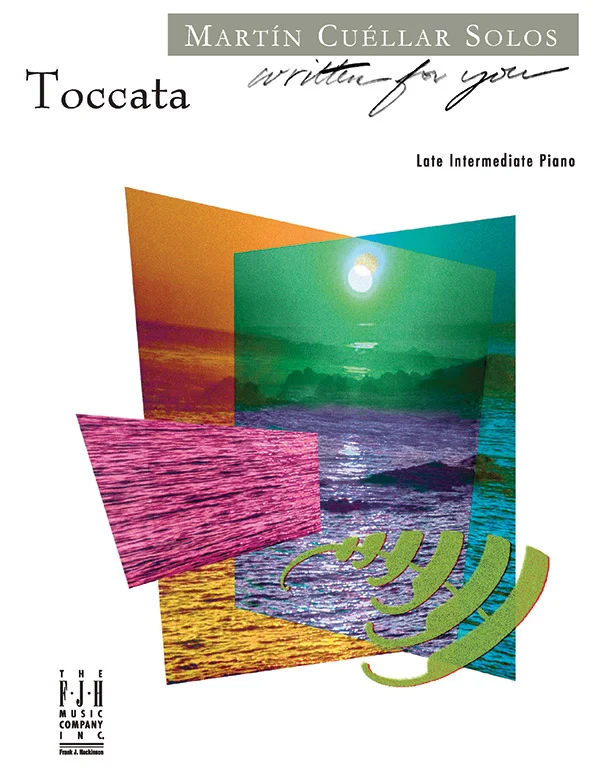
Toccata
Martin Cuéllar Late Intermediate
Digital Download
Printed Edition
When one of your students encounters a piece titled “Toccata” for the first time, how do you explain what that means? I think a lot of us describe a toccata as a quick, running of our fingers over the keys, kind of like checking out what’s under the hood- seeing what kind of horsepower we’ve got under there.
But toccatas aren’t just about taking your instrument for a musical test-drive. In this week’s podcast, I’m playing three contemporary toccatas that have virtuosic elements, but at their root are all about the expressive possibilities of touch, and the unique ways that keyboard instruments can transform physical gestures into color and character.
— Transcript —
When one of your students encounters a piece titled Toccata for the first time. How do you explain what that means?
The word Toccata comes from the Italian tocare, meaning to touch. And I think a lot of us describe a Toccata as a quick running of our fingers over the keys. Kind of like checking out what’s under the hood, seeing what kind of horsepower we’ve got under there.
And Toccatas can be that. But equating the term Toccata with taking your instrument for a test drive, that might be easily understood, but it doesn’t really explain the whole picture.
Today I’m playing three contemporary Toccatas that have virtuosic elements, but at their root are all about the expressive possibilities of touch. And the unique ways that keyboard instruments can transform physical gesture into color and character. Works by Kathleen Massoud, Timothy Brown, and Martin Cuellar are coming right up on the Piano Pedagogy Playlist.
Greetings and welcome. I hope life is treating you well. My name is Luke Bartolomeo. I’m a pianist, a teacher, and also a developer of music education apps for children, including Rhythm Swing. Each Monday on this podcast, I play through some of my current favorites from the Piano Teacher’s repertoire, all written by living composers.
Today’s episode is an all Toccata edition. And first up is Kathleen Massoud’s Emerald Toccata.
Now to me, calling it Emerald invokes a little sparkle and brilliance. And this piece certainly lives up to its name. And it does so without depending upon a great deal of technical showmanship. The sparkle comes from fluidity and ease, not volume and excessive speed.
Its central idea is the simple broken chord, played in descending patterns so that each top note played with the pinky finger contributes to a simple arcing melody. It’s a very short piece, so don’t blink or you might miss it.
Here’s Kathleen Massoud’s Emerald Toccata.
Now that I think of it, that’s actually a Toccata that would fit the bill for taking an unknown instrument on a test drive. I could see that piece being useful, for instance, when a student wants to try out the piano at a recital venue. You’d quickly learn a lot about the piano’s key action, its tone in various registers, the pedal mechanism.
I think that’s a fun little Toccata that fulfills its stereotypical duty.
Our next example is Timothy Brown’s Toccata. And it comes with an interesting origin story. The piece was commissioned by Linda Kennedy, a teacher in Arkansas, through her initiative called the Adopted Composer Program.
Her idea was that her studio would adopt a composer, in effect commission a work, as a way of putting living composers directly into her students’ musical lives. The students would maintain correspondence with the composer, and at the end of the school year, they would present a recital consisting exclusively of that composer’s works, including the premiere of the commissioned piece.
Timothy Brown’s Toccata was the first piece commissioned through the program. It’s a study in articulation, and it challenges the performer to maintain clarity at a fast tempo, so that all of the small musical fragments of the piece remain clear and distinct. Brown builds the piece from patterns. So I could see this as being a good fit for a student whose reading level maybe lags a bit behind their technical ability. Or really, for any student who’s willing to give the music the attention to detail it deserves.
One of Timothy Brown’s most popular pieces, here is his Toccatina.
Our final stop today on the Toccata Trail is the Toccata by Martin Cuellar. This is actually another commissioned piece. It was written for the Music Forum of Jackson, Mississippi, in celebration of its 30th anniversary. It’s arguably the most difficult of the three pieces today. It’s definitely the longest. But there is a repeat and a da capo, so it’s not quite as many notes to learn as the nearly four-minute runtime would suggest.
It has a very modern feel. It sounds like legit concert repertoire. There’s nothing studenty about it.
The main challenge is the constant movement between different registers of the keyboard. Individual sections are not necessarily overwhelming, but connecting everything seamlessly can be a real test for the late intermediate level student.
The piece bears both 4-4 and 8-8 time signatures. It’s an indication that the student needs to be aware of how the eighth notes are grouped and where the natural accents fall. Many of the measures sound like typical 4-4, but many of them have groupings more like 3 plus 3 plus 2.
This is a toccata in a very contemporary sense. Relentless movement, physical coordination, a very strong sense of percussiveness. It’s all shaped into a very polished recital piece. I hope you enjoy Martin Cuellar’s toccata.
Clearly, that is a piece for a student with a flair for the dramatic, especially when that coda arrives. It’s a piece that never overwhelms with power and also allows itself a gentler, more lyrical moment in the form of that lovely, contrasting middle section.
So what have we learned today about the toccata? Well, for one thing, it’s not as narrowly defined as some descriptions make it sound. At different times in music history, it’s been a fanfare or a prelude, a vehicle for improvisation. In the Romantic era, it existed as a virtuosic endurance test.
But I think the one common thread stems from that word toccata itself, touch. Taccatas are pieces intimately concerned with the particular ways in which keyboard players interact with their instruments. A variety of articulations, comfortable patterns that fit naturally under the fingers, the percussive quality of the modern piano.
For me, a toccata should be a piece which demonstrates the unique qualities and capabilities of keyboard instruments.
The three modern examples of the toccata we heard today by Kathleen Massoud, Timothy Brown, and Martin Cuellar are all available for purchase as digital downloads and in printed editions as well. As always, you can find links to today’s music in the episode description and also on the website pianopedagogyplaylist.com.
And just like that, we have to close the lid on this episode of the Piano Pedagogy Playlist.
If you were intrigued by Linda Kennedy’s Adopted Composers Initiative, I’ll also leave a link to an article she wrote describing her motivation and implementation. It’s a short article, but it offers a surprisingly practical blueprint for how an individual teacher, or maybe even a group of teachers working together, could make living composers a tangible part of their teaching curriculum.
I’ll be back next Monday with some more of what’s good in the contemporary piano teacher’s repertoire. Until then, keep nurturing the music and have a great week.
Leave a Reply